Gladiator Movers
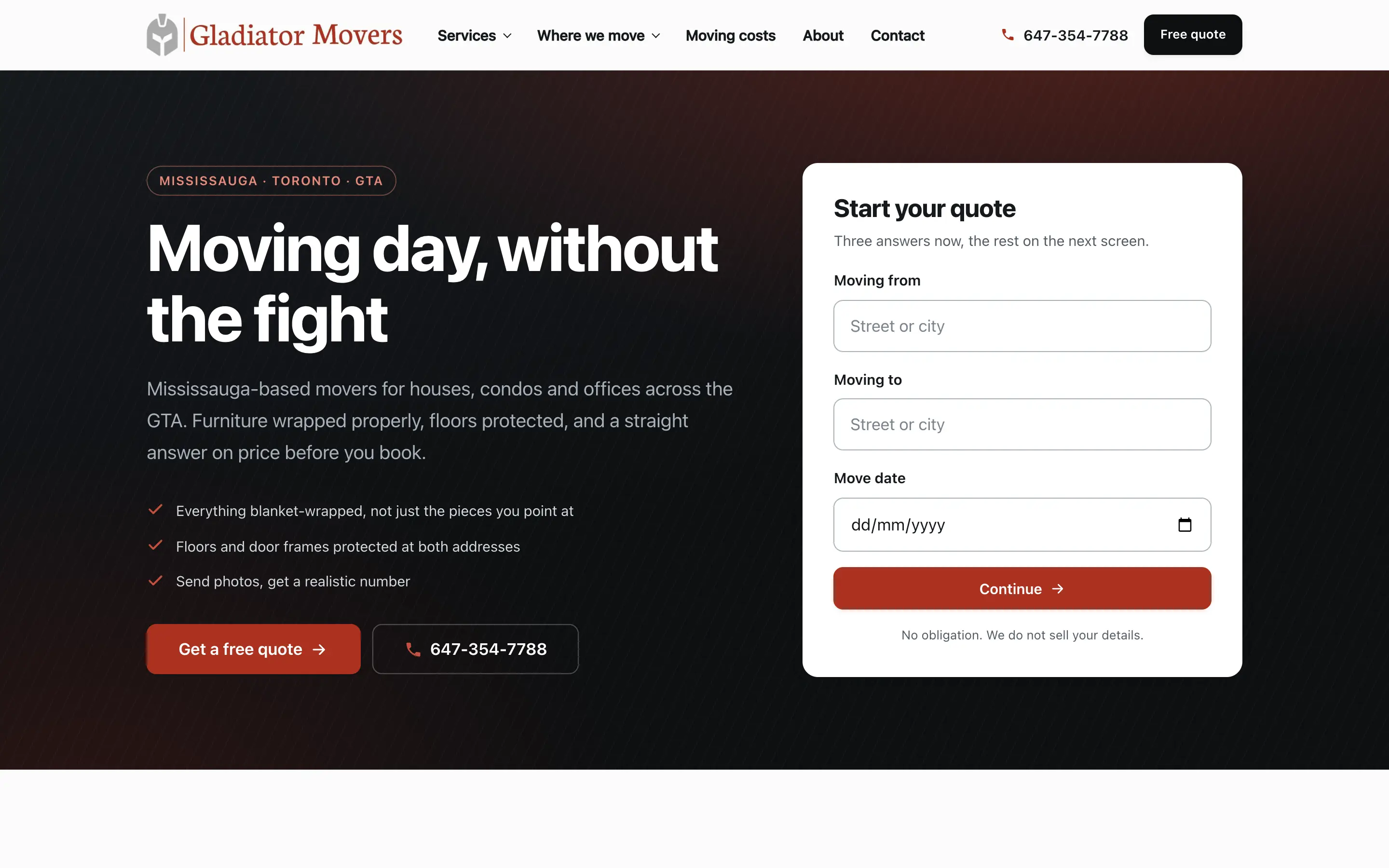
A moving company site where the quote starts in the hero, service pages exist for every job type, and the whole thing is built around one action: get a real number.
Toronto & the GTA
InceptiCode builds internal tools, portals and systems for Toronto businesses that have outgrown their spreadsheets — or outgrown the software that made them work the wrong way round.
Discovery first, then a fixed price
or call +1 647 691 5063
Written scope before development · Migration planned properly · You own the code and the data
Real projects
The same standard of thinking goes into a client-facing website and an internal tool. These are the ones you can go and look at.
A moving company site where the quote starts in the hero, service pages exist for every job type, and the whole thing is built around one action: get a real number.
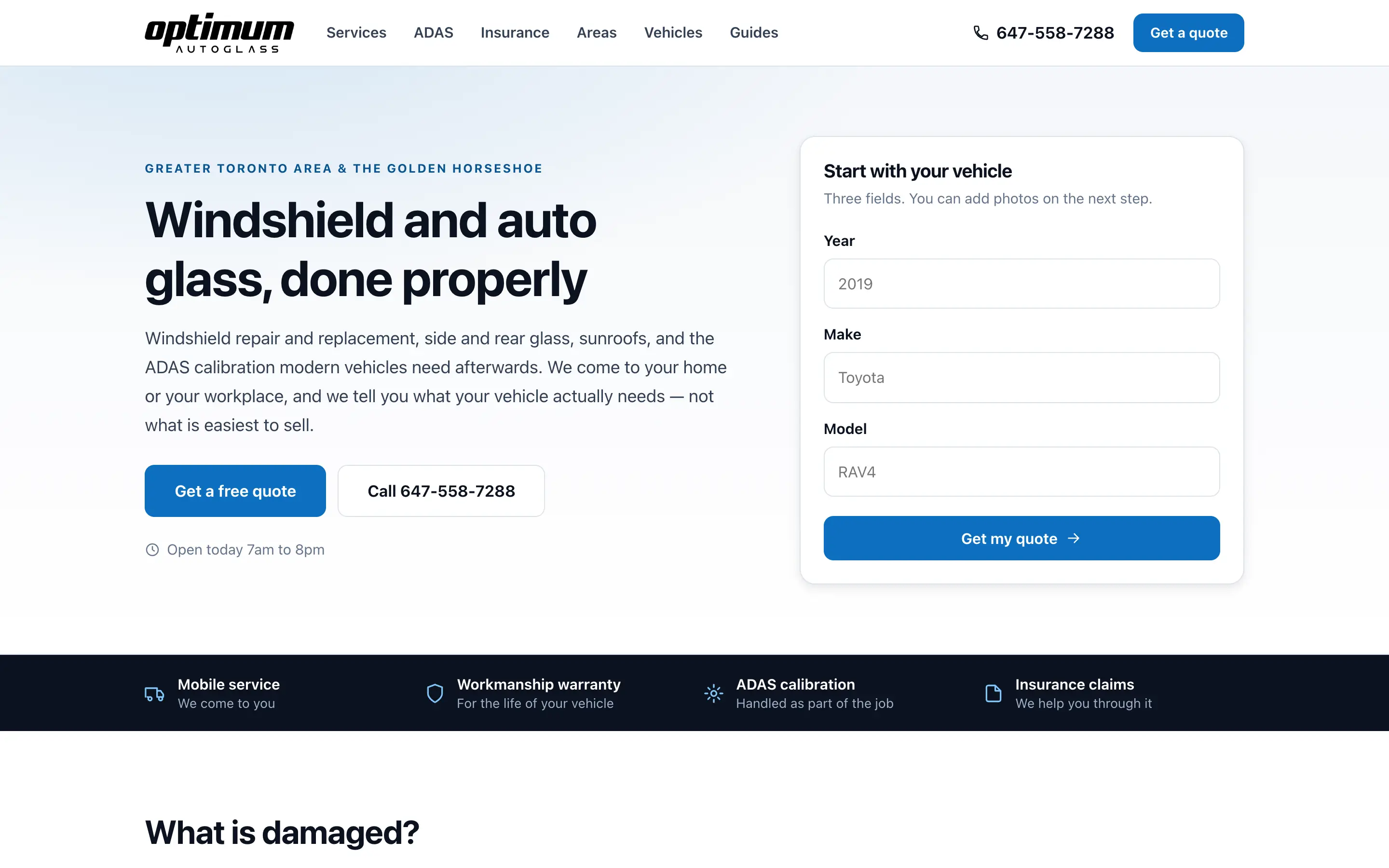
An auto glass site that asks for the vehicle first, explains ADAS and insurance plainly, and has a landing page for every service, area and vehicle people search.
A full online store with cart and checkout, built Arabic-first with a proper right-to-left layout and an English switch — not a translated afterthought.
Pricing
Per project, after discovery. Quoting custom software from a description alone means either padding the number heavily or sending change orders later — we would rather scope it properly and then fix the price.
Internal tools, portals and systems built around how your business runs.
Scoped per project
Most requested
A professional site for an established business that needs to win more work.
From C$2,490
Most projects: C$2,490–C$4,990
What's included
Ongoing hosting, infrastructure and any third-party service costs are paid by you, directly, in your name — and we will tell you what they will be before you commit. Ongoing support and enhancement are quoted separately and are never compulsory.
How it works
No discovery invoices, no scope creep, no surprise change orders halfway through.
A short call or a form. What you do, who buys from you, what you want the website to bring in. No technical questions.
InceptiCode comes back with a page-by-page plan and a fixed price. You approve it before anything is designed or built.
The key pages are designed properly, with your content in them rather than a wireframe. Two rounds of revisions are built into the price.
The approved design gets built — responsive, fast, with forms and tracking wired up as part of the work.
A staging link goes to you, and you go through it properly. Content, links, forms, phone numbers. Anything wrong gets fixed before launch.
InceptiCode handles DNS, hosting and the cutover, submits the sitemap to Google, and confirms tracking is recording. Then we stay reachable.
Why InceptiCode
We map the process as it actually happens today, including the workarounds and the exceptions. That is what determines whether a project succeeds — not the technology.
If existing software fits your situation with minor compromises, that is almost always the better answer, and we will say so. Custom software is worth it when the compromise is the thing costing you money.
The person entering fifty records a day is the real user. If their screen is slow or awkward the system gets worked around, and a worked-around system is worse than no system.
Getting your data out of the old system and into the new one properly is usually the largest single risk. It is scoped as its own piece of work, and we run in parallel until you trust the result.
Well-established, widely-known stacks. Not because they are exciting, but because you need to be able to hire someone else to work on this in three years.
Code, repository, hosting, data and documentation. Handed over, in your name.
FAQ
When off-the-shelf software forces you to run your business the wrong way round, when your team is doing a large amount of manual copying between systems, or when the spreadsheet everything depends on has become dangerous. If existing software fits with minor compromises, buy the software — it will be cheaper and better supported than anything we could build.
Per project, after a discovery stage that establishes what the system must do, who uses it, and what it replaces. You get a written scope and a fixed price before development starts. We do not quote custom software from a description alone — anyone who does is either padding heavily or about to send you change orders.
Yes, and the migration is usually the hard part rather than the build. Getting data out of the old system, mapping it correctly, and running both in parallel until you trust the new one — that is where these projects succeed or fail, and we plan for it from the start.
They are the best specification you have. A spreadsheet that a business has evolved over years contains the real rules, including the exceptions nobody documented. We start there.
You do — the source code, the repository, the hosting accounts and the data. We hand over documentation at the end. Nothing we build should be maintainable only by us.
You come back to us, or you take the code to another developer. We build with conventional, widely-used technology and document it, specifically so that second option is genuinely available to you.
A straightforward business website is usually three to five weeks from approved scope to launch. Larger sites and online stores typically run six to ten weeks. The single biggest factor is how quickly content and feedback come back from your side — we will tell you the honest timeline for your project before you commit, not an optimistic one.
You do not need a specification. Tell us what the process is today and what it costs you, and we will work out whether software is the answer and what it would take.
Call us and you get a person, not a queue. We normally reply within one business day.