Gladiator Movers
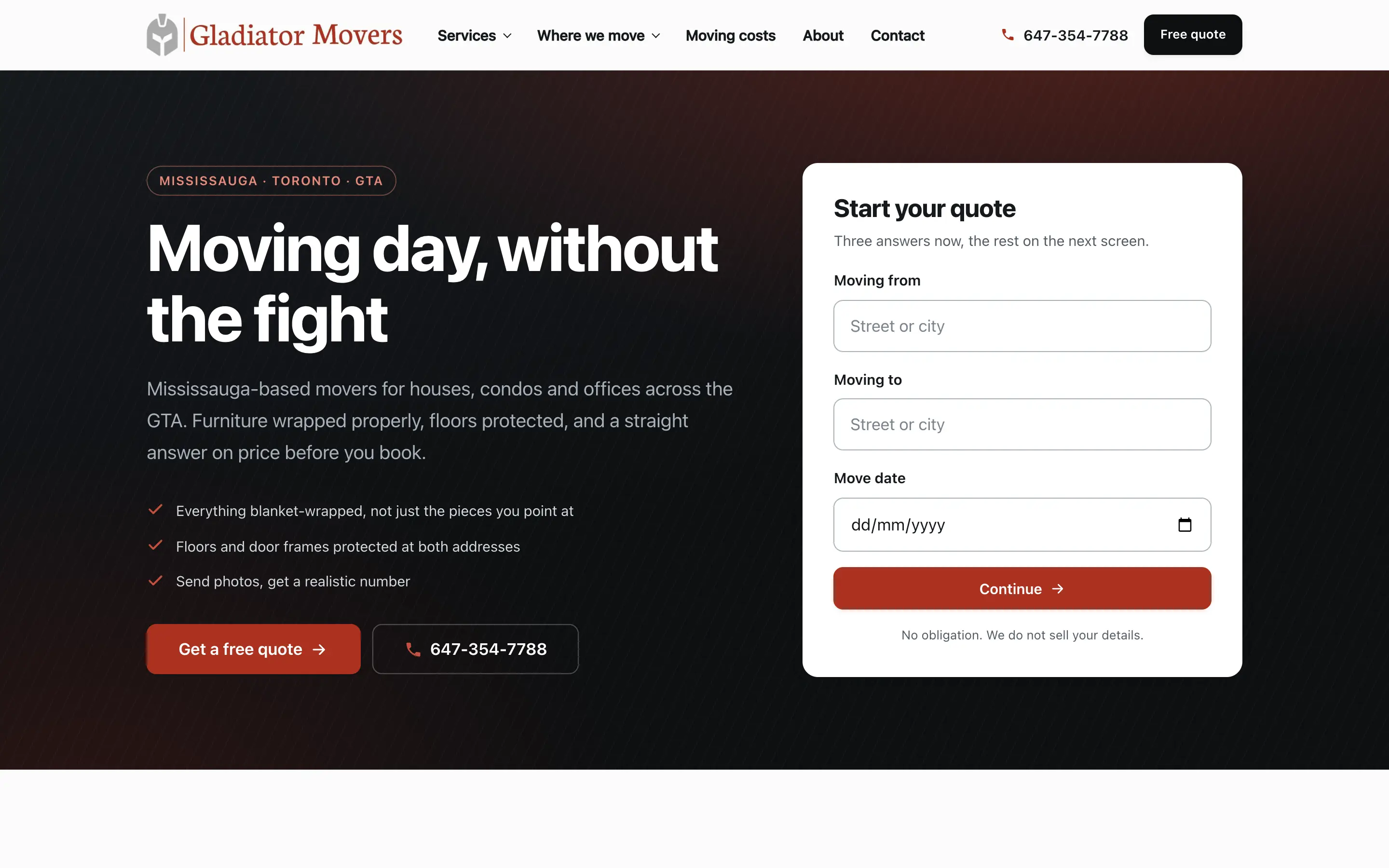
A moving company site where the quote starts in the hero, service pages exist for every job type, and the whole thing is built around one action: get a real number.
iOS & Android
InceptiCode builds iOS and Android apps for Toronto and GTA businesses that genuinely need one — and gives you a straight answer when a mobile website would serve you better for a fraction of the cost.
Scoped and fixed-priced per project
or call +1 647 691 5063
Both platforms · Store submission handled · Developer accounts in your name · You own the code
Real projects
Every project below was designed mobile-first and tested on real devices. Open them on your phone — that is where most of their traffic arrives.
A moving company site where the quote starts in the hero, service pages exist for every job type, and the whole thing is built around one action: get a real number.
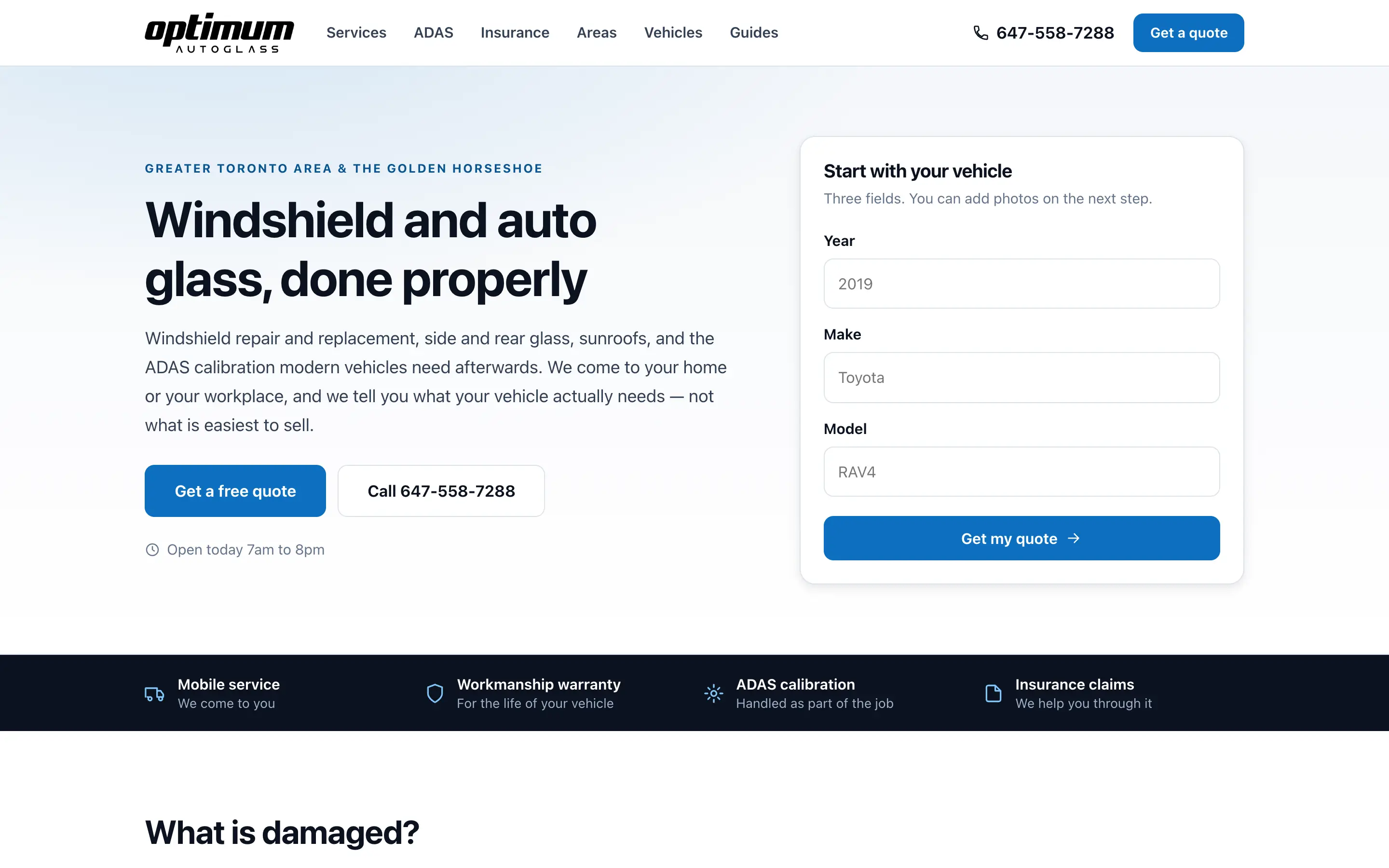
An auto glass site that asks for the vehicle first, explains ADAS and insurance plainly, and has a landing page for every service, area and vehicle people search.
A full online store with cart and checkout, built Arabic-first with a proper right-to-left layout and an English switch — not a translated afterthought.
Pricing
We do not publish a starting price for apps, because a one-platform first release and a two-platform app with accounts, payments and a backend are not comparable projects. We scope it, then fix the price.
iOS and Android apps, from a first release to an established product.
Scoped per project
Most requested
A professional site for an established business that needs to win more work.
From C$2,490
Most projects: C$2,490–C$4,990
What's included
Apple charges an annual Developer Program fee and Google charges a one-time registration fee. Both are paid by you, in your business name. Ongoing maintenance to keep pace with OS and store policy changes is quoted separately — and we will be explicit about it before you start.
How it works
No discovery invoices, no scope creep, no surprise change orders halfway through.
A short call or a form. What you do, who buys from you, what you want the website to bring in. No technical questions.
InceptiCode comes back with a page-by-page plan and a fixed price. You approve it before anything is designed or built.
The key pages are designed properly, with your content in them rather than a wireframe. Two rounds of revisions are built into the price.
The approved design gets built — responsive, fast, with forms and tracking wired up as part of the work.
A staging link goes to you, and you go through it properly. Content, links, forms, phone numbers. Anything wrong gets fixed before launch.
InceptiCode handles DNS, hosting and the cutover, submits the sitemap to Google, and confirms tracking is recording. Then we stay reachable.
Why InceptiCode
The most useful thing we can do on a first call is establish whether an app is genuinely the right answer. Often a mobile-first website does the job for a fraction of the money and with nothing to install.
Apps fail by trying to ship everything at once. We define the smallest version that is genuinely useful, get it in front of real users, and build the rest based on what they actually do.
Account deletion, privacy declarations, permission justifications, target SDK levels. These reject apps at review. We handle them during the build.
Most business apps need somewhere to store data and an admin interface for staff. We treat that as part of the project rather than a surprise phase after the app is "finished".
Developer accounts registered in your business name from day one. Moving a published app between developer accounts later is painful and sometimes impossible.
Developer account fees, maintenance, OS updates and store policy changes are real recurring commitments. You will hear about them before you commit, not eighteen months in.
FAQ
Often not, and we will tell you. An app makes sense when people use it repeatedly, when you need push notifications, or when it has to work offline or use the device — camera, GPS, Bluetooth. If customers would use it once, a good mobile website is cheaper, faster to build, and does not require anyone to install anything.
Cross-platform covers both iOS and Android from one codebase and is the right answer for most business apps. Native is worth it when the app leans heavily on device features, needs the last few percent of performance, or has to match platform conventions exactly. We choose based on what the app does, not on what is fashionable.
More than a website, and it varies too much to publish a starting price honestly. A tightly scoped first release for one platform is a very different project from a two-platform app with accounts, payments, push and a backend. We scope it and give you a fixed price before development starts.
Yes — store listings, screenshots, descriptions, privacy declarations, and the submission itself. Both stores have review requirements that reject apps for reasons that surprise first-time publishers, so we plan for them during the build rather than discovering them at submission.
You do. The Apple Developer and Google Play accounts are registered in your business name, and the source code is yours. This matters enormously: an app published under someone else's developer account is very difficult to move later.
Apps need maintenance in a way websites do not — iOS and Android release yearly, and both stores periodically raise their minimum requirements. An app left untouched for two years typically stops being installable. We will be clear about that ongoing commitment before you start, not after.
A straightforward business website is usually three to five weeks from approved scope to launch. Larger sites and online stores typically run six to ten weeks. The single biggest factor is how quickly content and feedback come back from your side — we will tell you the honest timeline for your project before you commit, not an optimistic one.
Tell us what people would use it for and how often. If an app is the right answer we will scope it. If it is not, we will say so and tell you what is.
Call us and you get a person, not a queue. We normally reply within one business day.