Gladiator Movers
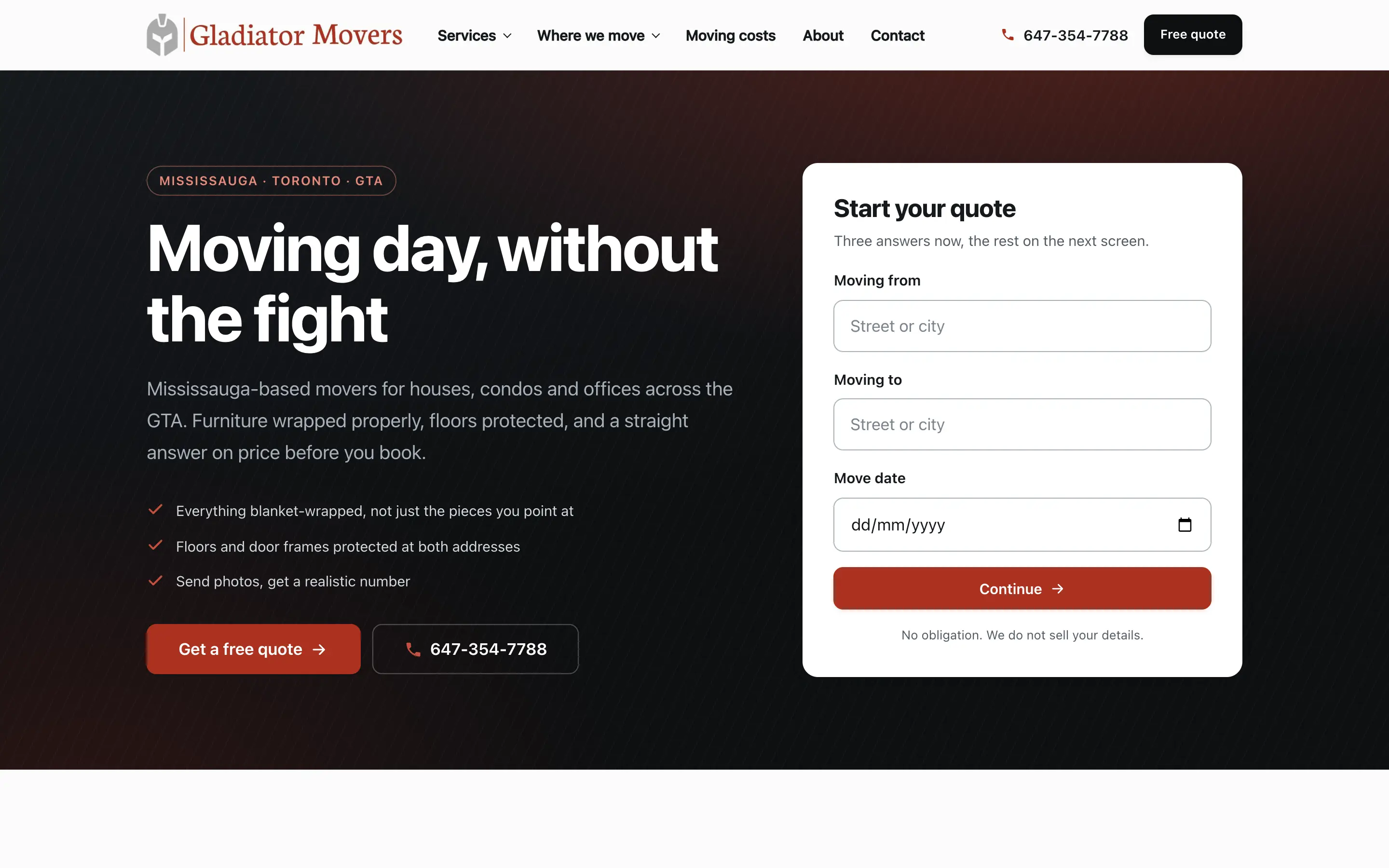
A moving company site where the quote starts in the hero, service pages exist for every job type, and the whole thing is built around one action: get a real number.
Beauty & Wellness
A beauty or wellness booking is chosen on a phone, on evidence, and against a specific service and a specific person — and the visitor abandons the moment the site asks them to phone during business hours instead. InceptiCode builds salon, spa and med-spa sites in the GTA around the booking, the price list and the results gallery, with the advertising rules that apply the moment a treatment becomes a medical one.
Business websites from C$2,490, fixed in writing before design starts.
The buying decision
The customer has already decided what they want done; they are choosing who does it. That makes the decision unusually concrete: is this exact service offered, what does it cost, who performs it, what does their work look like, and can I get an appointment on Saturday. Photographs of real results carry more weight in this sector than any copy on the page, and reviews carry more than the photographs. The complication is regulatory — a med-spa offering injectables, lasers or anything delegated by a physician moves into a different advertising regime than a hair salon, and the same page design that is fine for one is a compliance problem for the other.
What that changes
Six decisions that follow directly from how this purchase gets made, rather than from what looks good in a portfolio.
Square, Fresha, Vagaro, Boulevard, Mindbody, Jane — whichever you run, the site books into it, with service, duration, provider and deposit handled where the platform supports them. A phone number as the only booking route loses the majority of a market that books at 10pm.
Every service, its duration and its price or an honest range where the price genuinely depends on length or condition. "Prices upon consultation" across an entire menu costs more bookings than any individual price ever will.
Specialisms, training and certifications, their own portfolio, and which services they take. Clients rebook a person, not a premises, and they will search that person by name — that search should reach your site.
Before-and-after photography, consistently lit and framed, tied to the specific service, with written client consent on file for every image. In medical aesthetics, presentation of results is itself regulated — no guaranteed outcomes, no misleading comparisons — and that constraint has to shape the template rather than be applied to it afterwards.
Injectables, lasers, medical peels and delegated procedures bring in professional advertising rules, restrictions on testimonials and claims, consent and intake handling, and the health-privacy obligations that attach to any intake form. A med-spa site built on a salon template is a regulatory exposure wearing a nice photograph.
Product sales are real margin for salons and spas, but only where there is a reason to buy from you rather than from anywhere else — professional-only lines, a bundle with a treatment, or a client who is already rebooking. Built as part of the booking site rather than as a separate storefront nobody visits.
Common mistakes
Every one of these is something we have found on a live site in this industry, and every one costs enquiries that were already earned.
Evidence
InceptiCode has not yet published a beauty or wellness case study, and will not imply one. What transfers directly: Optimum Auto Glass is a booking-led local service business where the site turns an immediate need into a scheduled appointment, which is the same conversion path; and Opti4Club is a retail build where the product page had to carry the sale on a phone, which is the retail half of a salon site. The specialised part here is regulatory — the professional advertising rules that govern medical aesthetics — and for a med-spa we would want your college's current guidance in hand before designing the results gallery, not after.
A moving company site where the quote starts in the hero, service pages exist for every job type, and the whole thing is built around one action: get a real number.
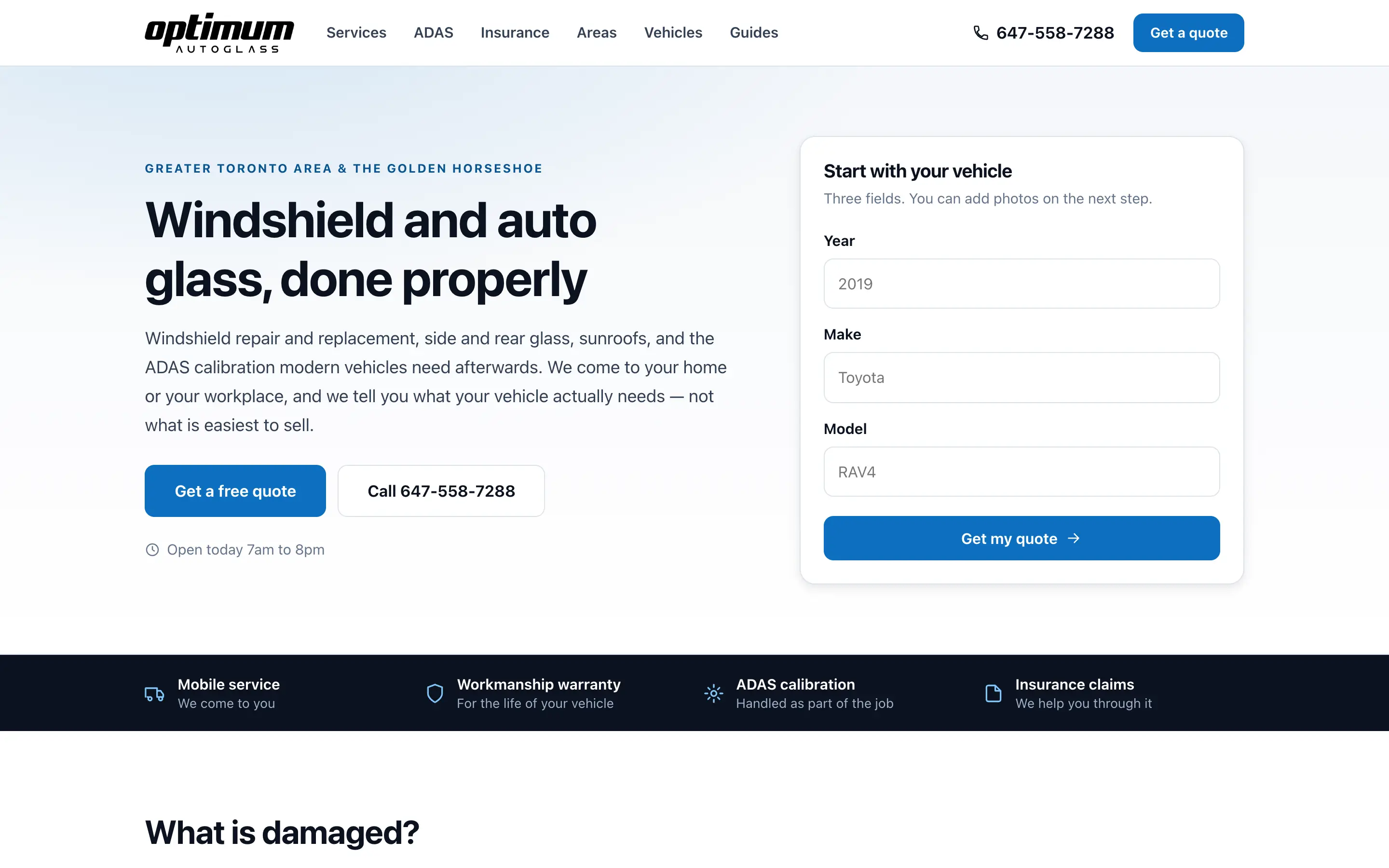
An auto glass site that asks for the vehicle first, explains ADAS and insurance plainly, and has a landing page for every service, area and vehicle people search.
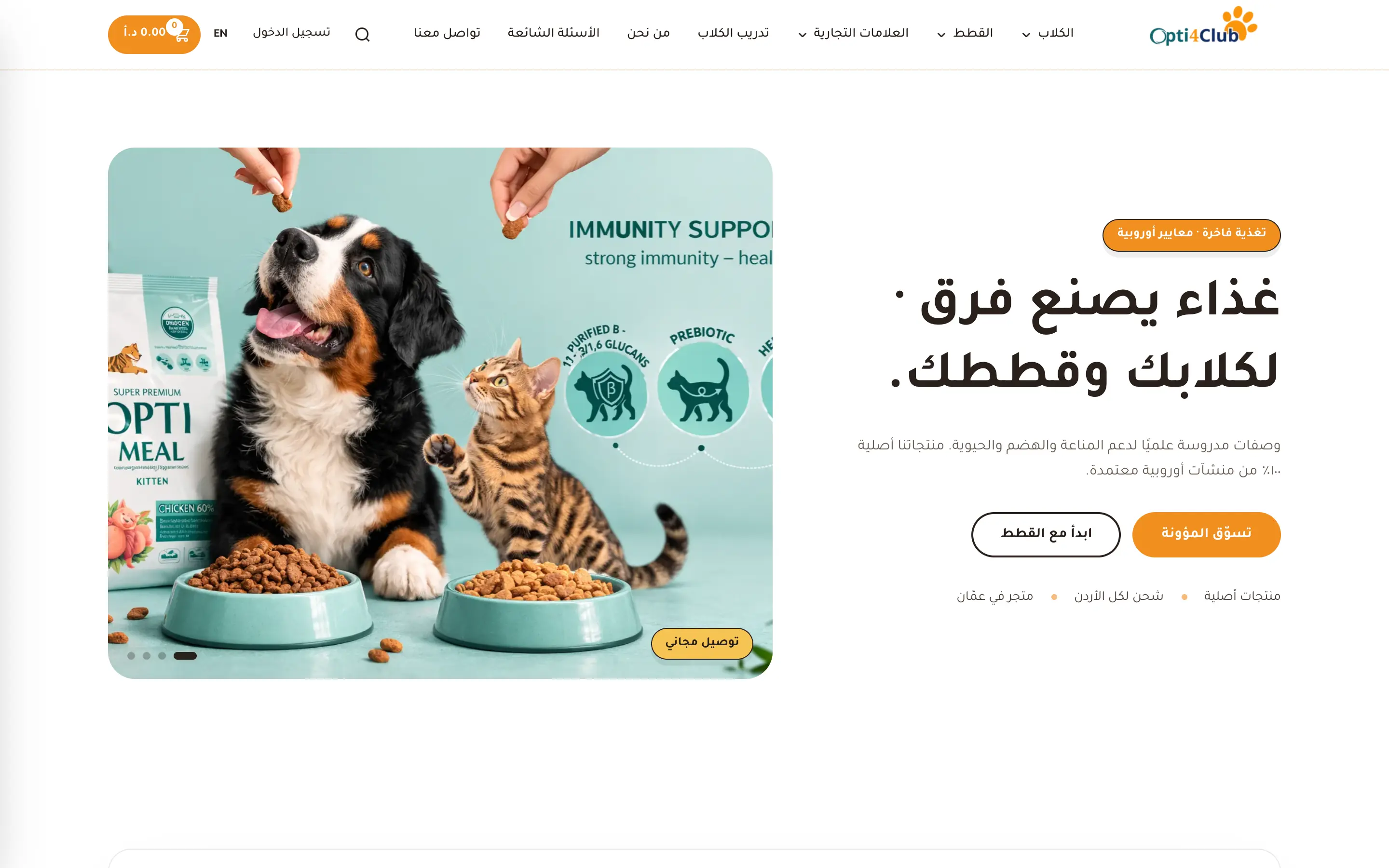
A full online store with cart and checkout, built Arabic-first with a proper right-to-left layout and an English switch — not a translated afterthought.
How it works
The same process whatever the sector — because the thing that changes by industry is what gets built, not how the project runs.
A short call or a form. What you do, who buys from you, what you want the website to bring in. No technical questions.
InceptiCode comes back with a page-by-page plan and a fixed price. You approve it before anything is designed or built.
The key pages are designed properly, with your content in them rather than a wireframe. Two rounds of revisions are built into the price.
The approved design gets built — responsive, fast, with forms and tracking wired up as part of the work.
A staging link goes to you, and you go through it properly. Content, links, forms, phone numbers. Anything wrong gets fixed before launch.
InceptiCode handles DNS, hosting and the cutover, submits the sitemap to Google, and confirms tracking is recording. Then we stay reachable.
FAQ
Whichever you already run well — the site should integrate with it rather than force a migration. Square, Fresha, Vagaro, Boulevard, Mindbody and Jane all expose booking that can be built into the site properly, so the client picks a service, a provider and a time without leaving your pages. If you are choosing from scratch we will give you a recommendation based on your services, deposit policy and whether you sell retail, but the worst outcome is a beautiful site linking out to a booking page that looks nothing like it.
Publish everything you can, and give an honest range where the price genuinely depends on hair length, condition or treatment area. What does not work is "prices upon consultation" across the whole menu: it reads as expensive to everyone, including the clients for whom you are not, and it costs you the bookings for the straightforward services that have a fixed price and needed no consultation at all.
Yes, with two conditions that are not negotiable. Every image needs documented written client consent covering website and social use, kept on file — verbal permission is not sufficient and this does get tested. And for medical aesthetic treatments, the professional advertising rules restrict how results may be presented: no implied guarantees, no misleading comparison, and in some categories restrictions on testimonials entirely. We build the gallery to those rules rather than building it first and reviewing it after.
Materially, yes. The moment you offer injectables, medical-grade lasers, medical peels or anything delegated by a physician, you are advertising under professional regulations rather than ordinary consumer marketing rules, and your intake forms are collecting health information subject to PHIPA. That changes the claims the site may make, how testimonials and results may be presented, how consent is captured, and where the intake data is stored. A med-spa built on a salon template is the most common serious compliance problem we see in this sector.
More answers on the FAQ page and the pricing page.
What you do, who buys from you, and what the site has to bring in. Business websites from C$2,490. We normally reply within one business day.