Gladiator Movers
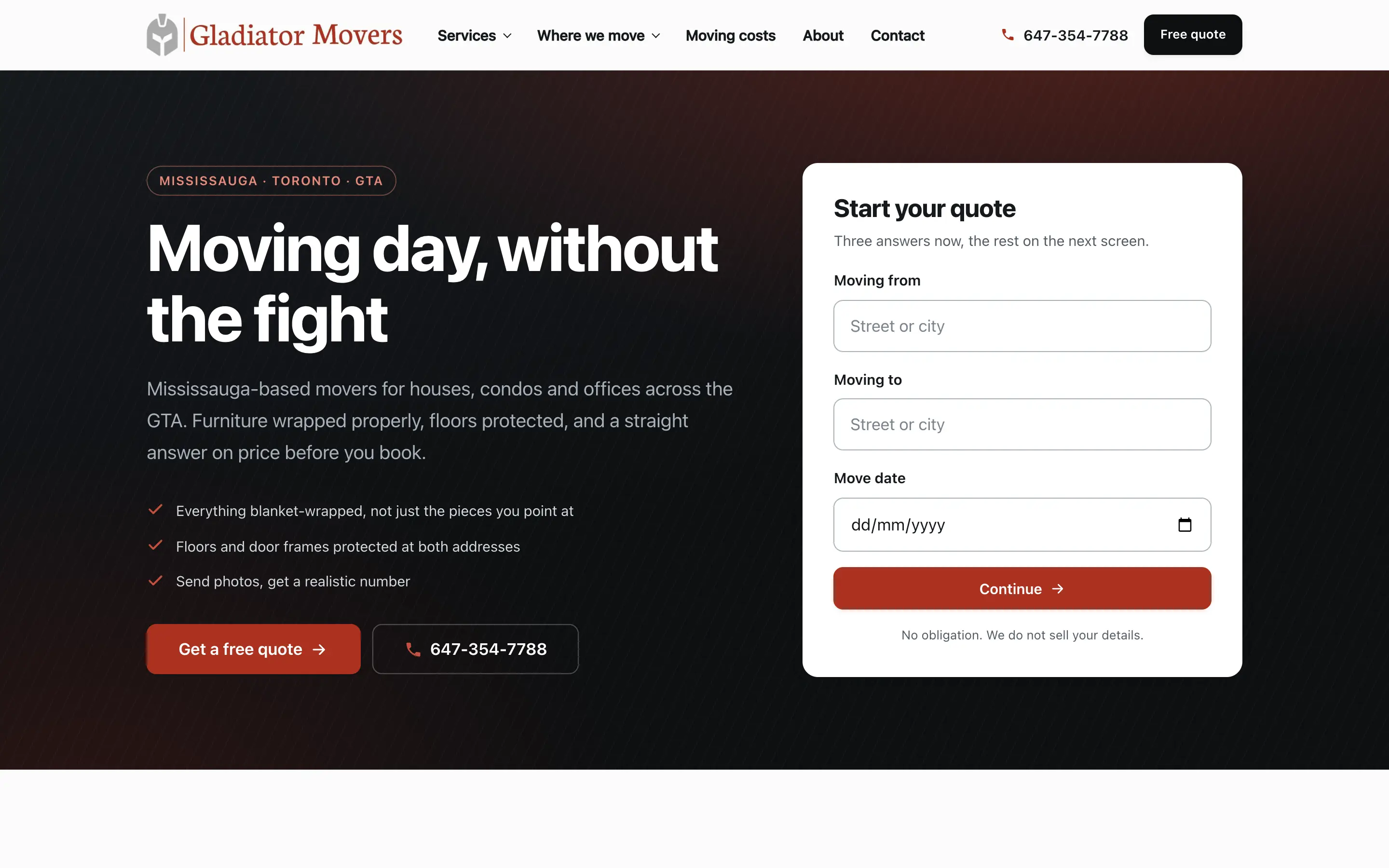
A moving company site where the quote starts in the hero, service pages exist for every job type, and the whole thing is built around one action: get a real number.
Fitness & Studios
Almost nobody buys a gym membership from a website; they book a trial, a drop-in or a first class, and the membership is decided in the building. InceptiCode builds fitness and studio sites in Toronto and the GTA around that first visit — the schedule, the trial offer and the price — because a site that hides any of the three loses the visit to the studio three blocks away that does not.
Business websites from C$2,490, fixed in writing before design starts.
The buying decision
The decision is local, emotional and quick, and it is made almost entirely on a phone. The prospect wants four answers: how much, what time, how far, and what happens on the first visit if I have never done this before. Price opacity is the sector's defining mistake — a studio that will not publish rates reads as expensive and evasive, and the visitor simply checks the next one. Intimidation is the second: for a large share of the market, the real barrier is not cost but the fear of walking in and not knowing what to do, and the site that speaks to that specific fear converts the customer that everyone else's site scares off.
What that changes
Six decisions that follow directly from how this purchase gets made, rather than from what looks good in a portfolio.
Pulled from whatever you already run — Mindbody, Wodify, Glofox, Zen Planner — not retyped by hand and stale within a week. Filterable by class, day and instructor, readable at a glance on a phone in a hallway, and bookable from the same screen.
Memberships, drop-ins, class packs, personal training rates and the contract length. Every studio that hides them believes it is protecting the sales conversation; what it is actually doing is filtering out everyone unwilling to fill in a form to learn a number, which is most people. This site publishes its own prices for exactly the same reason.
A free class, a week pass, an intro offer, a consultation. One clear offer, on every page, with a form short enough to complete standing up. A site with a "Join Now" button and no low-commitment first step is asking for a decision the visitor is not ready to make.
What to wear, what to bring, where to park, how early to arrive, what the first session actually involves, and whether beginners are genuinely welcome. This page converts the segment every competitor loses, and almost nobody builds it.
Certifications, specialisms, who they work best with, and a real photograph. Personal training and specialised coaching are chosen by person, and a prospect will search an instructor's name — that search should land on your site rather than their Instagram.
Gym search is "near me" with a tight radius, so the map listing, structured data, consistent listings and neighbourhood-level pages do more work here than almost anywhere else. Someone will not travel across the city for a spin class; they will travel four blocks.
Common mistakes
Every one of these is something we have found on a live site in this industry, and every one costs enquiries that were already earned.
Evidence
InceptiCode has not yet built for a fitness business and this page says so plainly. The transferable work is real, though: the booking-led conversion path — an urgent or emotional decision turned into a scheduled first appointment — is the Optimum Auto Glass structure, and the published-pricing argument above is not a theory here but the model this site itself runs on, including the parts of it that cost us enquiries from buyers below the range. What we would be new to is class-scheduling platform integration, and we would scope that against your specific system before quoting rather than assuming it.
A moving company site where the quote starts in the hero, service pages exist for every job type, and the whole thing is built around one action: get a real number.
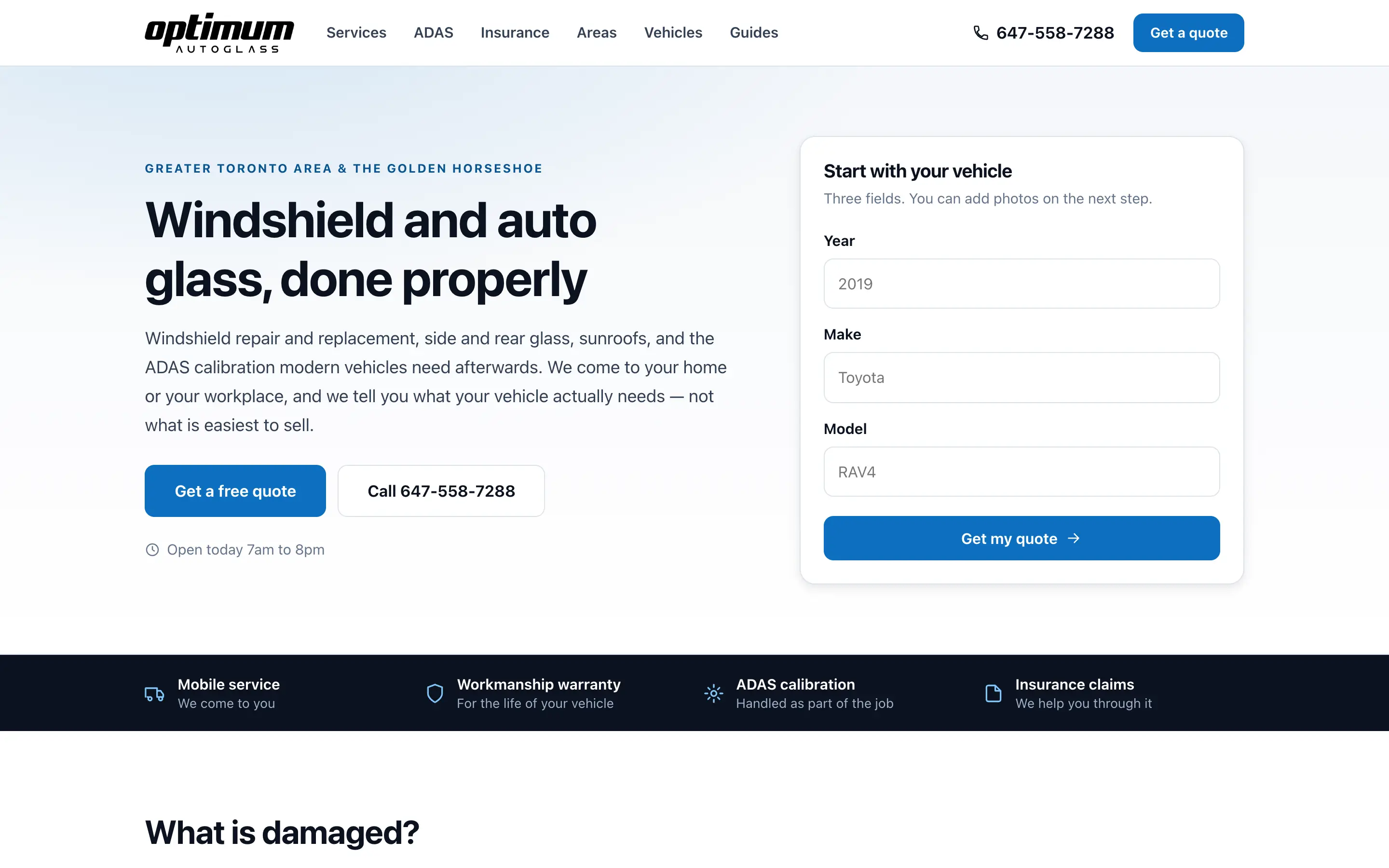
An auto glass site that asks for the vehicle first, explains ADAS and insurance plainly, and has a landing page for every service, area and vehicle people search.
A full online store with cart and checkout, built Arabic-first with a proper right-to-left layout and an English switch — not a translated afterthought.
How it works
The same process whatever the sector — because the thing that changes by industry is what gets built, not how the project runs.
A short call or a form. What you do, who buys from you, what you want the website to bring in. No technical questions.
InceptiCode comes back with a page-by-page plan and a fixed price. You approve it before anything is designed or built.
The key pages are designed properly, with your content in them rather than a wireframe. Two rounds of revisions are built into the price.
The approved design gets built — responsive, fast, with forms and tracking wired up as part of the work.
A staging link goes to you, and you go through it properly. Content, links, forms, phone numbers. Anything wrong gets fixed before launch.
InceptiCode handles DNS, hosting and the cutover, submits the sitemap to Google, and confirms tracking is recording. Then we stay reachable.
FAQ
Yes, and it is usually the single change that most improves lead quality for a studio. The argument for hiding them is that it protects the sales conversation; what actually happens is that most prospects will not fill in a form to find out a number and simply check the next studio, so you never learn about the ones you lost. Publishing rates filters out the people who were never going to join and warms up the ones who arrive already comfortable with the price.
Yes, where your booking platform exposes it. Mindbody, Wodify, Glofox, Zen Planner and most current systems provide either an embed or an API, so the site displays the real schedule and books against it rather than showing a table somebody retypes and forgets. If your system offers neither, we will say so before quoting — a hand-maintained schedule is worse than no schedule, because it is wrong in a way visitors only discover after they show up.
After the schedule, it is the page nobody builds: what happens on your first visit. What to wear, what to bring, where to park, how early to come, what the session actually involves and whether beginners are genuinely welcome. The real barrier for a large share of the market is not price, it is the fear of walking in and looking lost — and that fear is addressed by a page, cheaply, or not at all.
Almost never, and this is worth saying because it gets sold hard in this sector. Members already have the app that comes with your booking platform, and a second one costs real money to build, list, maintain and update through every OS release, for a feature set a good mobile website delivers. Spend it on the schedule, the trial flow and the first-visit page instead. If you genuinely need an app later, this site will still be the thing that fills it.
More answers on the FAQ page and the pricing page.
What you do, who buys from you, and what the site has to bring in. Business websites from C$2,490. We normally reply within one business day.