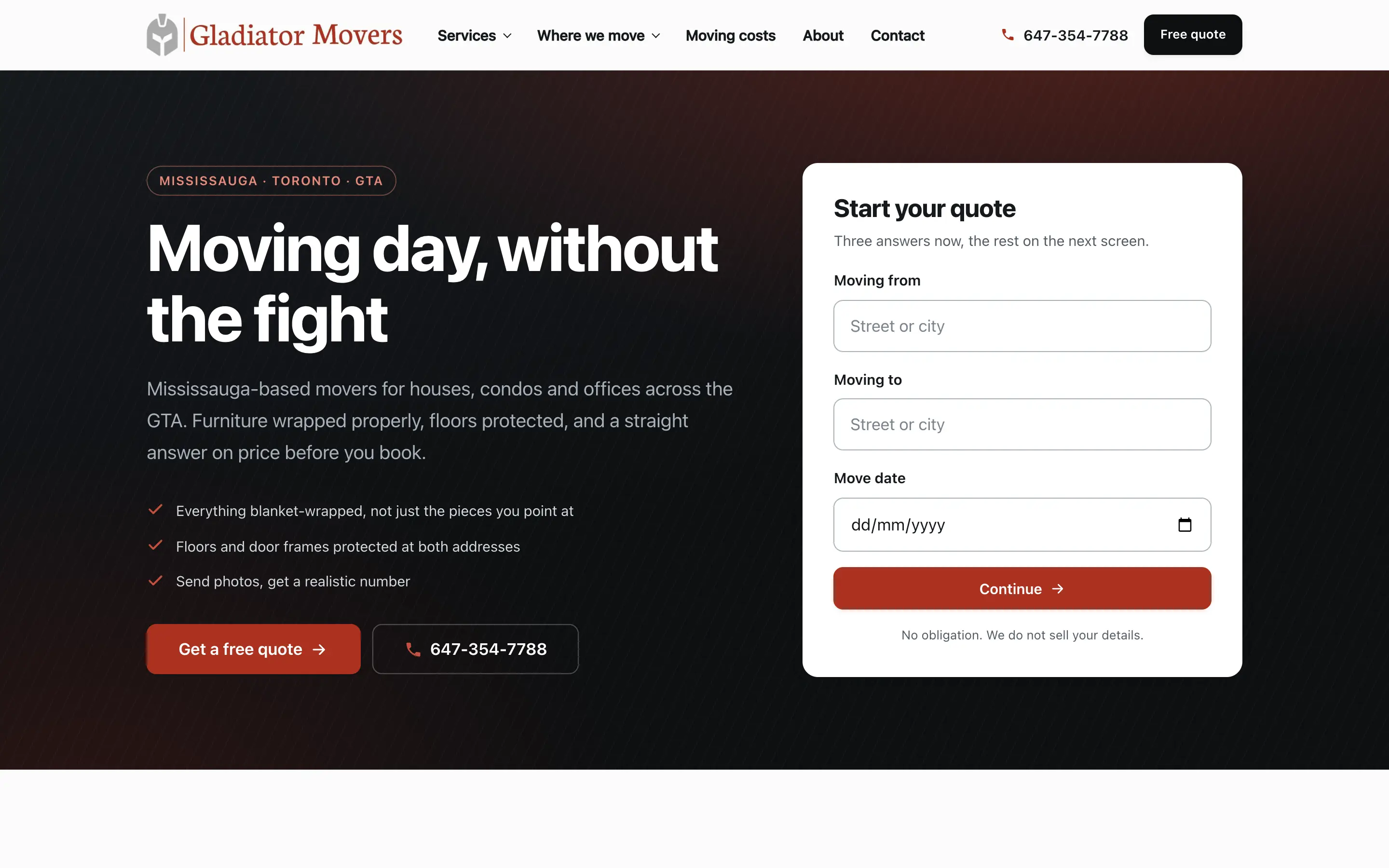
Gladiator Movers
A moving company site where the quote starts in the hero, service pages exist for every job type, and the whole thing is built around one action: get a real number.
Education & Training
Education is bought on outcomes and trust, on a deadline set by a term calendar, and usually by a parent who is not the person who will sit in the class. InceptiCode builds tutoring, private school, college and professional-training sites in the GTA around that split decision — the programme detail the student needs, the credibility and cost the parent needs, and an enrolment path that works in both directions.
Business websites from C$2,490, fixed in writing before design starts.
The buying decision
The buyer and the user are frequently different people, and a site that speaks to only one of them fails. A parent choosing a tutoring centre or a private school is buying reassurance: qualifications, ratios, curriculum alignment, safety, and evidence that this worked for children like theirs. An adult buying a professional certificate is buying an outcome: what the credential is worth, who recognises it, how long it takes, what it costs and whether it can be done around a job. Both are working to a hard deadline — a term start, an intake date, an exam — which makes urgency real rather than manufactured, and both will disqualify a provider that will not state its fees.
What that changes
Six decisions that follow directly from how this purchase gets made, rather than from what looks good in a portfolio.
Who it is for, prerequisites, curriculum, hours, format, schedule, instructor, cost, what you leave with. Programme pages are what people actually search for and land on, and a combined "Our Programs" list answers a question nobody asked.
Tuition, materials, registration, exam fees and payment plans. In education the omission reads as institutional evasiveness in a way it does not in other sectors, because the buyer is comparing against publicly funded options whose costs are published.
Accreditations, ministry registration, recognising bodies, instructor qualifications, and outcomes only where they can be substantiated. "Our students succeed" is worth nothing; a named accreditation is checkable, and a checkable claim is the only kind worth publishing. Regulated claims are a compliance exposure, not just a marketing one.
Intake dates, application steps, what is needed at each one, and where a part-completed application is saved. For schools that means a tour or open-house booking; for training providers, seat availability against a start date. The form is the product at the moment of decision.
The student page and the parent page are different pages, not one page hedging. A teenager evaluating a programme and a parent evaluating a provider need different evidence in a different tone, and separating them lets each be direct.
Intake dates, registration deadlines, term calendars and holiday closures need to be editable by staff without a developer, because they change every term and a stale deadline on a school website is the fastest way to lose an enrolment cohort.
Common mistakes
Every one of these is something we have found on a live site in this industry, and every one costs enquiries that were already earned.
Evidence
InceptiCode has not published an education case study yet. The honest overlap is structural: a programme catalogue where each programme is its own searchable, comparable, conversion-ready page is the same architecture as the eighteen service pages built for Gladiator Movers, and the published-fees argument above is the model this site runs on itself. Where education genuinely differs — ministry registration language, regulated outcome claims, and the two-reader problem — we would want your compliance requirements in writing before scoping, rather than discovering them at review.
A moving company site where the quote starts in the hero, service pages exist for every job type, and the whole thing is built around one action: get a real number.
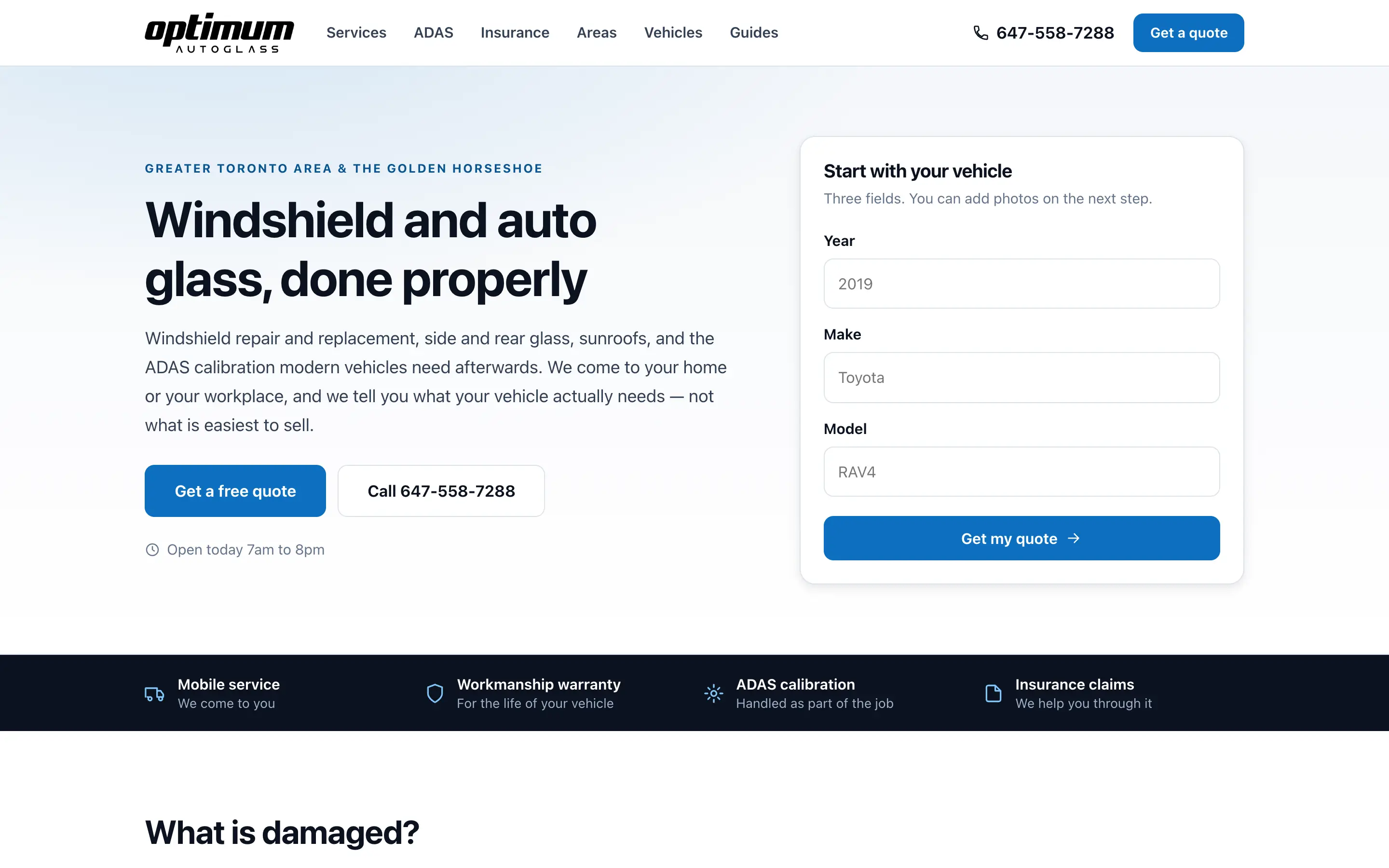
An auto glass site that asks for the vehicle first, explains ADAS and insurance plainly, and has a landing page for every service, area and vehicle people search.
A full online store with cart and checkout, built Arabic-first with a proper right-to-left layout and an English switch — not a translated afterthought.
How it works
The same process whatever the sector — because the thing that changes by industry is what gets built, not how the project runs.
A short call or a form. What you do, who buys from you, what you want the website to bring in. No technical questions.
InceptiCode comes back with a page-by-page plan and a fixed price. You approve it before anything is designed or built.
The key pages are designed properly, with your content in them rather than a wireframe. Two rounds of revisions are built into the price.
The approved design gets built — responsive, fast, with forms and tracking wired up as part of the work.
A staging link goes to you, and you go through it properly. Content, links, forms, phone numbers. Anything wrong gets fixed before launch.
InceptiCode handles DNS, hosting and the cutover, submits the sitemap to Google, and confirms tracking is recording. Then we stay reachable.
FAQ
Yes, including the parts that are not tuition — materials, registration, exam fees and any payment plan. Education buyers are comparing you against publicly funded options whose costs are published, so silence does not read as premium positioning, it reads as evasion. A stated fee with a clear breakdown of what it includes filters out the enquiries that were never going to convert and removes the most common objection from the ones that will.
Usually not, and conflating the two is an expensive mistake. The marketing site's job is enrolment; delivery belongs in a platform built for it — Moodle, Canvas, Teachable, Thinkific — which does assessment, progress and content far better than a custom build ever will for the money. The right integration is a clean handoff: the site sells and enrols, the platform teaches, and a student moves between them without a second login where the platform supports it.
Only with a source, and in several regulated categories only within specific rules. This is not caution for its own sake: unsubstantiated outcome claims are the most common compliance problem in education marketing, and an unsourced statistic is also the least persuasive thing on the page to the sceptical parent you are trying to convince. Where you have real, attributable data we will publish it prominently with its source. Where you do not, we will not write one.
They are built as editable content from the start, not typed into a page template, so your admissions staff can change a date without an invoice or a developer. This matters more in education than almost anywhere else, because the dates change every term and a stale registration deadline on the site does not just look careless — it actively costs you the cohort that believed it.
More answers on the FAQ page and the pricing page.
What you do, who buys from you, and what the site has to bring in. Business websites from C$2,490. We normally reply within one business day.