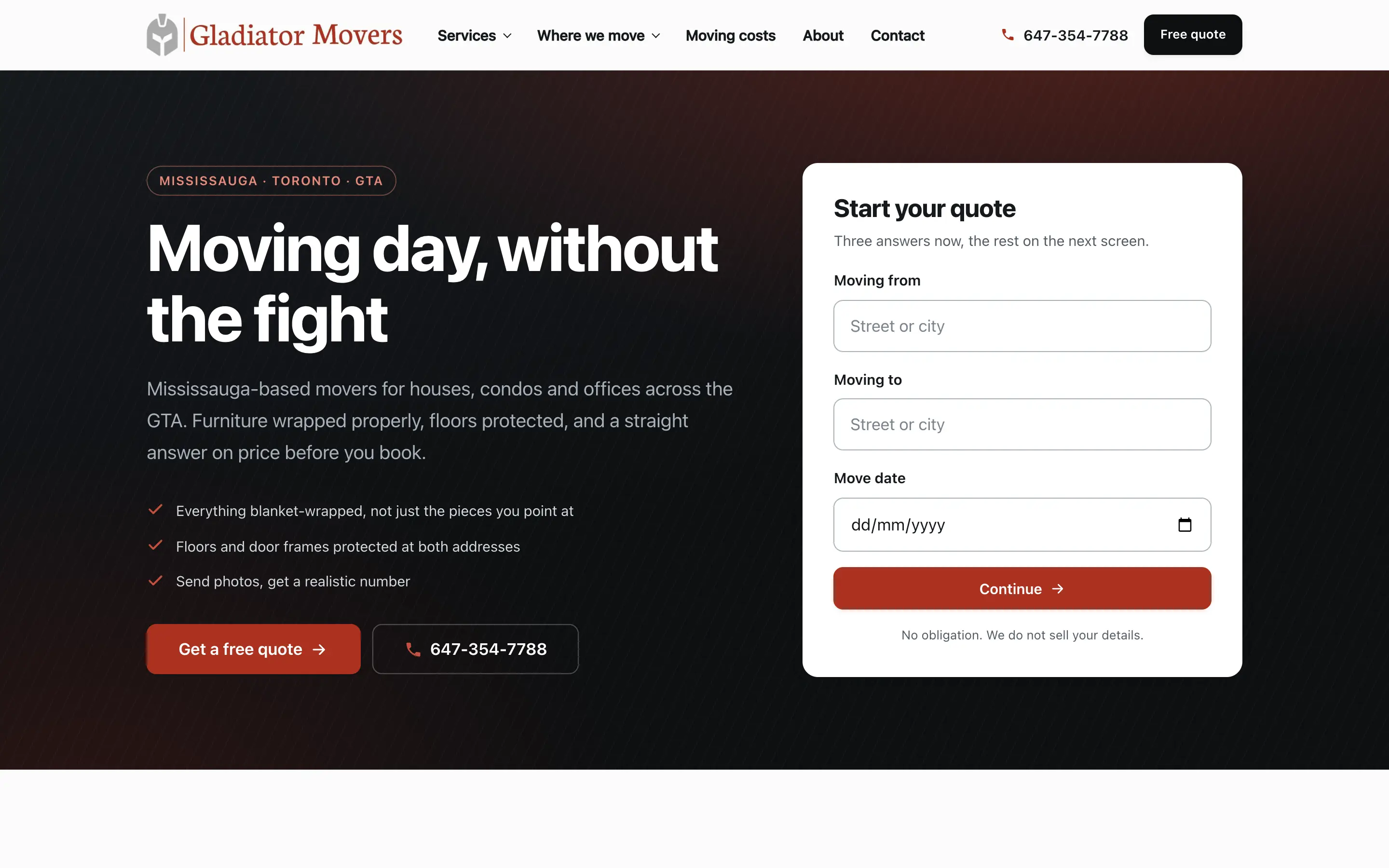
Gladiator Movers
A moving company site where the quote starts in the hero, service pages exist for every job type, and the whole thing is built around one action: get a real number.
Nonprofits & Community
A nonprofit website serves two audiences whose needs conflict, and most are built for only one: a donor deciding whether to give, and a person in difficulty trying to find out whether they qualify for help. InceptiCode builds charity, association and community-organisation sites in Toronto and the GTA that do both — a donation flow that does not lose people at the third step, and service pages a person in a hard week can actually use.
Business websites from C$2,490, fixed in writing before design starts.
The buying decision
The donor is deciding on trust and specificity. They want to know what their money does in concrete terms, that the organisation is a registered charity with a real number, that a receipt will arrive, and that giving takes under a minute. Every additional field, redirect or unbranded payment page loses a measurable share of them. The service user is in a different situation entirely: often stressed, frequently on an old phone, sometimes reading in a second language, and looking for eligibility, location, hours and what to bring. A page written to impress funders is unusable for them. The third audience — funders and boards — needs annual reports and governance available without cluttering either of the first two paths.
What that changes
Six decisions that follow directly from how this purchase gets made, rather than from what looks good in a portfolio.
Suggested amounts with what each one actually does, one-time and monthly on the same screen, a payment page that still looks like your site, and an immediate receipt. Every redirect and every optional field costs completed donations, and monthly giving is worth several times a one-off — so it should be the easy choice rather than a checkbox.
Eligibility, cost, location, hours, languages, accessibility, what to bring, and what happens when you arrive. Written in plain language at a reading level a stressed person can use, not in the funder vocabulary the same programme is described with in a grant application.
What was done, for how many people, over what period, with the source. Concrete numbers convert donors far better than adjectives, and unlike adjectives they are checkable — which matters more here than in any commercial sector, because trust is the entire product.
Charitable registration number, annual reports, financial statements, board list and governance. Present and easy to find without dominating the pages meant for service users.
Volunteer recruitment and event registration are separate funnels from donation with their own forms, their own follow-up and their own pages. Collapsing them into a general contact form is why most nonprofit sites convert badly on all three.
Ontario's website conformance requirement catches non-profits with 50 or more employees in the province, so a small charity is usually under the line and a large one is not — worth checking rather than assuming either way. Beyond the regulation, the audience genuinely includes people using screen readers, magnification and older devices, often reading in a second language. This is the sector where an inaccessible site does not merely lose a customer — it denies a service.
Common mistakes
Every one of these is something we have found on a live site in this industry, and every one costs enquiries that were already earned.
Evidence
InceptiCode has not yet published a nonprofit case study. The relevant transferable work is the conversion path itself: Opti4Club is a checkout build where every additional step measurably cost completed transactions, and a donation flow is that same problem with a smaller amount and a warmer motive. The accessibility work described above is not aspirational here — this site is built and tested to WCAG 2.2 AA with a keyboard on every release. Where a nonprofit differs is in CRA receipting requirements and donor-data handling, which we would confirm against your accountant's requirements before building the flow rather than after.
A moving company site where the quote starts in the hero, service pages exist for every job type, and the whole thing is built around one action: get a real number.
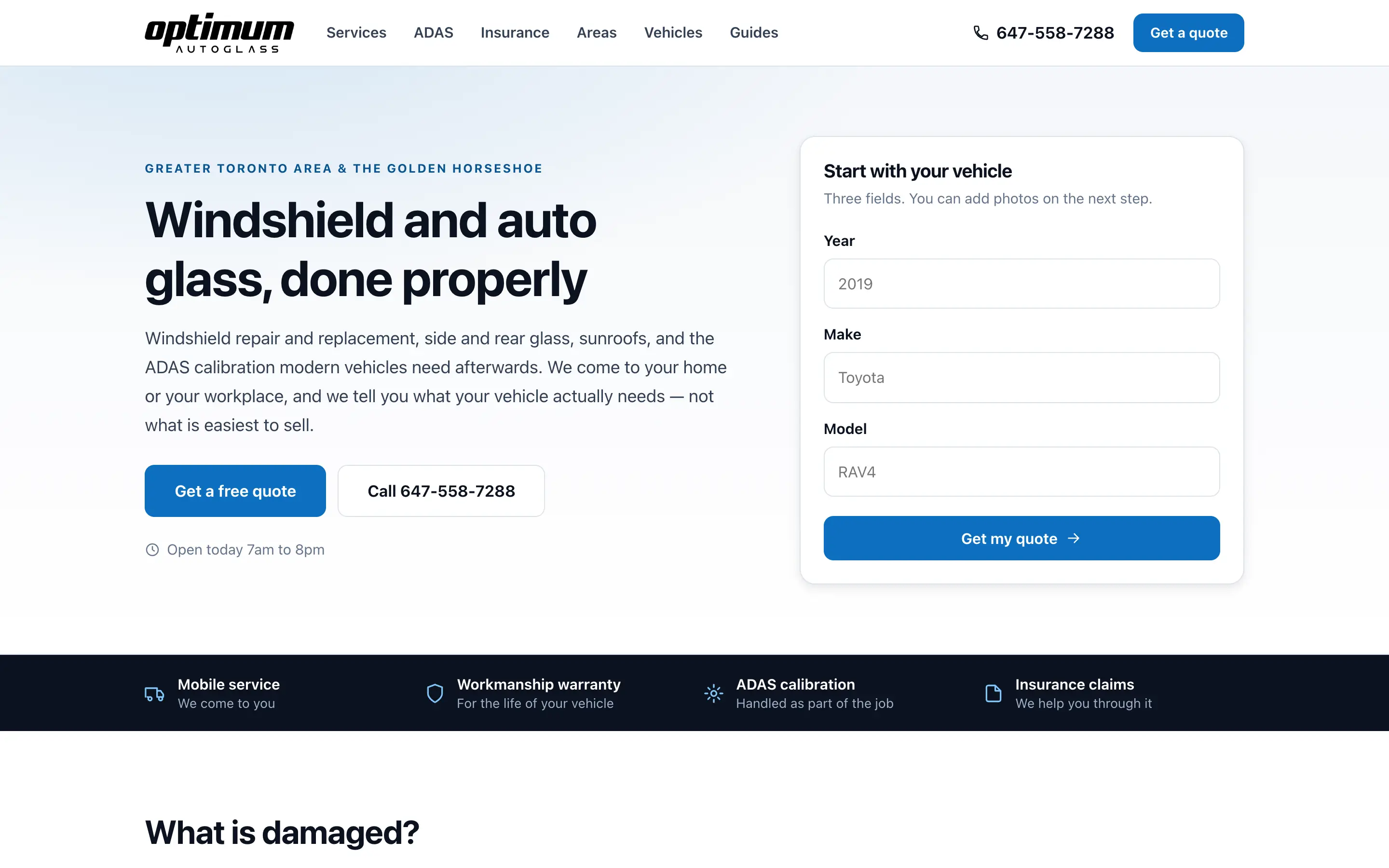
An auto glass site that asks for the vehicle first, explains ADAS and insurance plainly, and has a landing page for every service, area and vehicle people search.
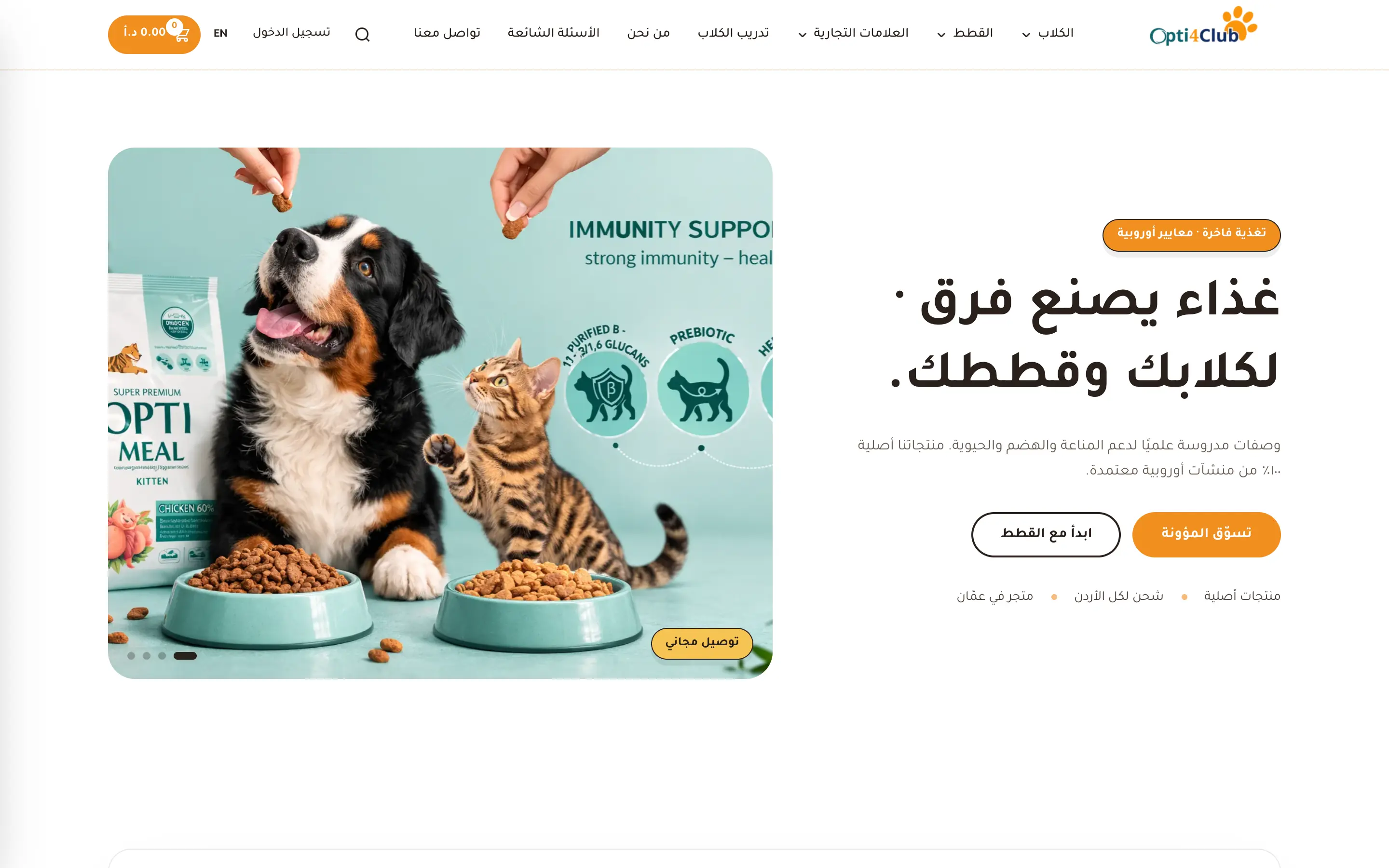
A full online store with cart and checkout, built Arabic-first with a proper right-to-left layout and an English switch — not a translated afterthought.
How it works
The same process whatever the sector — because the thing that changes by industry is what gets built, not how the project runs.
A short call or a form. What you do, who buys from you, what you want the website to bring in. No technical questions.
InceptiCode comes back with a page-by-page plan and a fixed price. You approve it before anything is designed or built.
The key pages are designed properly, with your content in them rather than a wireframe. Two rounds of revisions are built into the price.
The approved design gets built — responsive, fast, with forms and tracking wired up as part of the work.
A staging link goes to you, and you go through it properly. Content, links, forms, phone numbers. Anything wrong gets fixed before launch.
InceptiCode handles DNS, hosting and the cutover, submits the sitemap to Google, and confirms tracking is recording. Then we stay reachable.
FAQ
The one whose fees, receipting and integration match how you actually operate — commonly CanadaHelps, Zeffy, Keela, Stripe with a receipting layer, or your existing CRM's own tool. What matters more than the brand is that the donor stays on a page that looks like your site and gets an immediate receipt. The most expensive configuration is any flow that bounces the donor to an unbranded third-party page, which is where a large share of them quietly stop.
By accepting that they are different audiences and giving them different paths from the first screen rather than one compromise page. Donors need impact, transparency and a fast way to give; service users need eligibility, location, hours and what to bring, in plain language. They can share a site comfortably — they cannot share a page. Trying to write one page that does both is the most common structural mistake in the sector.
Anything you can substantiate, stated with a number, a period and a source — and nothing you cannot. This is stricter than commercial marketing for a good reason: trust is the entire product, and an unsourced claim that a funder or journalist checks costs far more than the donation it was meant to earn. Concrete and modest consistently outperforms sweeping and vague with donors anyway.
There is scope flexibility rather than a headline discount, and being straight about that is more useful than a percentage. In practice we scope a nonprofit build to the two or three things that genuinely move the outcome — the donation flow, the programme pages and accessibility — and leave the rest for later, which usually lands well below what a full commercial build would cost. Ask when you enquire and we will tell you plainly what fits the budget you actually have.
More answers on the FAQ page and the pricing page.
What you do, who buys from you, and what the site has to bring in. Business websites from C$2,490. We normally reply within one business day.