Gladiator Movers
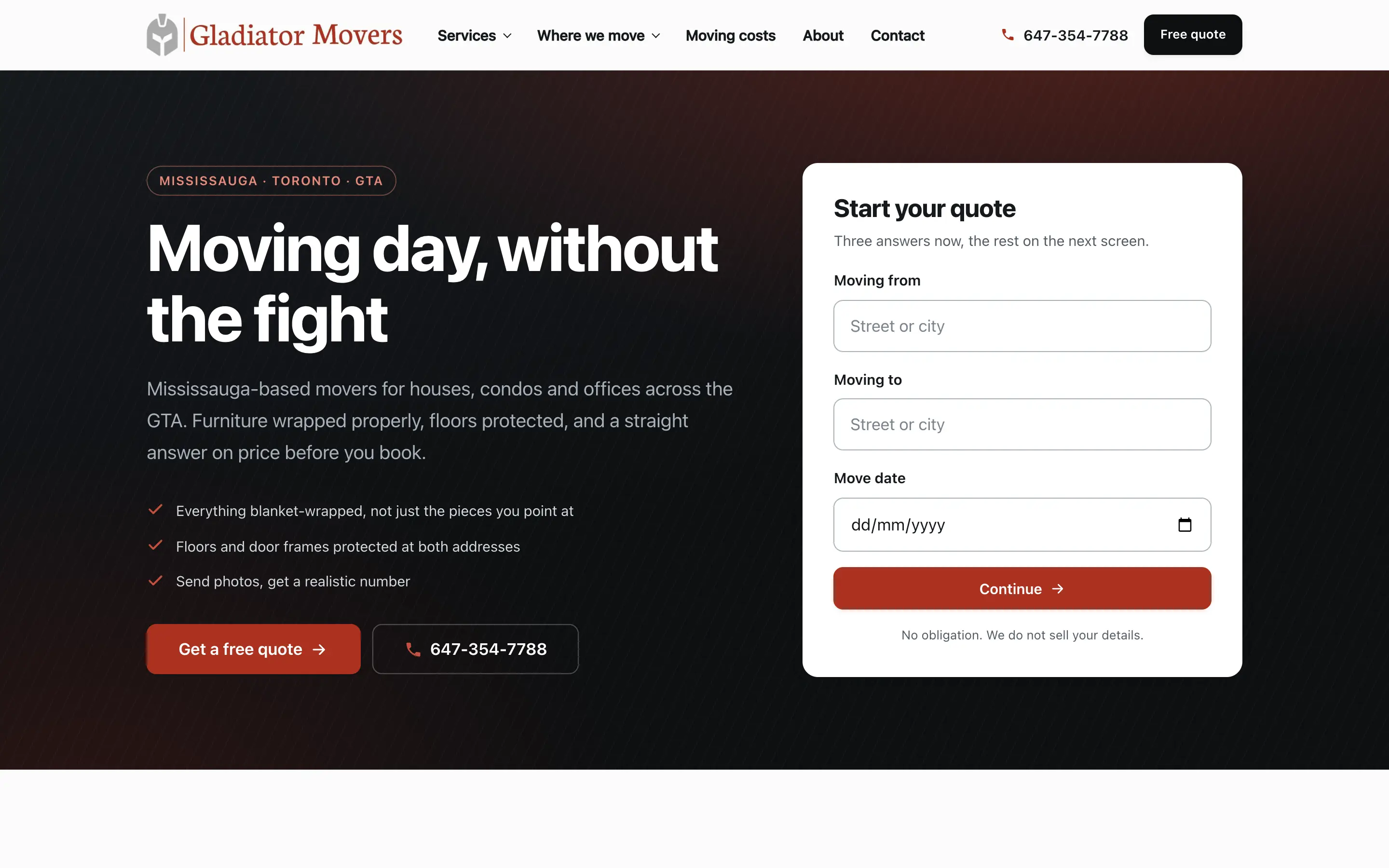
A moving company site where the quote starts in the hero, service pages exist for every job type, and the whole thing is built around one action: get a real number.
Legal Services
A law firm website is read by someone having one of the worst weeks of their life, on a phone, comparing three firms in an hour. InceptiCode builds legal websites in Toronto and the GTA around that reader — and around the Law Society of Ontario’s marketing rules, which govern what a firm may claim about itself and are the reason a great deal of legal web copy is quietly non-compliant.
Business websites from C$2,490, fixed in writing before design starts.
The buying decision
Legal work is bought in a state the rest of this file has no equivalent for: urgency plus fear plus a total inability to judge quality. The client cannot evaluate legal skill, so they evaluate whether the firm handles their exact problem, whether it will cost something they can survive, and whether a human will answer today. Practice area beats brand every time — a person facing an eviction does not want a firm that does everything, they want the firm whose page is about evictions. And the second decision is made before any of that: a large share of legal enquiries come from a phone at a moment when a form is the wrong tool and a ringing line is the right one.
What that changes
Six decisions that follow directly from how this purchase gets made, rather than from what looks good in a portfolio.
Family, criminal, immigration, employment, personal injury, real estate, wills and estates, corporate — each is a different person in a different crisis, and each is a separate search. A page titled "Areas of Practice" with eleven bullet points competes for none of them. The page that wins names the situation the reader is actually in and says what happens next.
Ontario restricts what a firm may say about itself: "specialist" and "expert" are constrained language unless the lawyer holds the Law Society’s Certified Specialist designation, outcomes may not be guaranteed, and there are specific rules for advertising contingency-fee arrangements. Most of the offending copy on legal websites was written by a marketer who did not know, and it is far cheaper to write the page correctly than to have it reviewed and rewritten.
A firm cannot act until it knows the other side’s name, and it should not be receiving a detailed account of a dispute through an unsecured public form. The right shape is a short intake capturing enough to run the conflict check and route the matter, an explicit statement that submitting it does not create a solicitor-client relationship, and a private channel for the detail once the firm has said yes.
A flat fee for an uncontested matter, an hourly band, a contingency percentage with the disbursement rules stated, or a consultation fee that is credited if retained. Any of those beats silence. Clients filter hard on cost in this category precisely because they have no other measure, and a firm that says nothing reads as the expensive one.
Year of call, the courts and tribunals they appear before, languages spoken, and the kinds of matters they run most. In the GTA the language line converts on its own: a client who can be represented in Mandarin, Punjabi, Farsi or Arabic will choose the firm that says so over the firm that happens to be able to.
Tap-to-call in the header on every page, after-hours behaviour stated plainly, and an answer to "what do I do right now" above the form. For criminal and family work especially, the site’s job is to get a person to a phone, not to collect an email address for a nurture sequence.
Common mistakes
Every one of these is something we have found on a live site in this industry, and every one costs enquiries that were already earned.
Evidence
InceptiCode has not published a law firm case study, and this page says so rather than implying one. What transfers is exact rather than vague: Gladiator Movers is a build where the entire site exists to convert an urgent, anxious, comparison-shopped enquiry into a phone call within minutes, which is structurally the same problem a family or criminal practice has; and the compliance discipline this page describes is the same discipline behind the accessibility and claims rules this very site is built and gated to. We would rather point at that than show a photograph of a bookshelf.
A moving company site where the quote starts in the hero, service pages exist for every job type, and the whole thing is built around one action: get a real number.
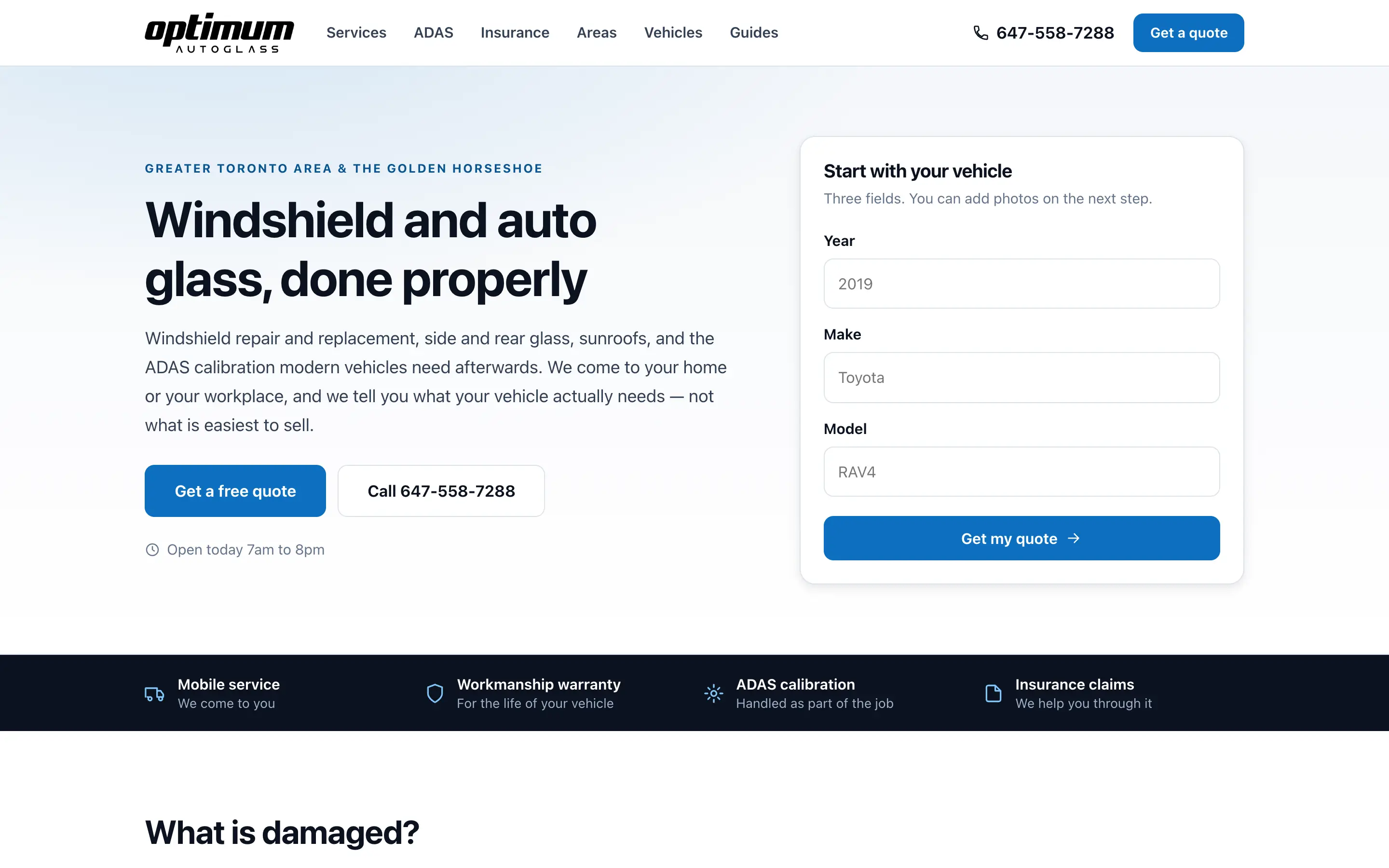
An auto glass site that asks for the vehicle first, explains ADAS and insurance plainly, and has a landing page for every service, area and vehicle people search.
A full online store with cart and checkout, built Arabic-first with a proper right-to-left layout and an English switch — not a translated afterthought.
How it works
The same process whatever the sector — because the thing that changes by industry is what gets built, not how the project runs.
A short call or a form. What you do, who buys from you, what you want the website to bring in. No technical questions.
InceptiCode comes back with a page-by-page plan and a fixed price. You approve it before anything is designed or built.
The key pages are designed properly, with your content in them rather than a wireframe. Two rounds of revisions are built into the price.
The approved design gets built — responsive, fast, with forms and tracking wired up as part of the work.
A staging link goes to you, and you go through it properly. Content, links, forms, phone numbers. Anything wrong gets fixed before launch.
InceptiCode handles DNS, hosting and the cutover, submits the sitemap to Google, and confirms tracking is recording. Then we stay reachable.
FAQ
Not freely. The Law Society of Ontario reserves "specialist" for lawyers who hold its Certified Specialist designation, and treats claims of superiority and guarantees of outcome as marketing that may not be used. There is a great deal a firm can say instead — the practice areas it actually runs, the volume and kind of matters it handles, years of call, courts appeared before — and those are more persuasive than the banned phrasing anyway. We write to that line rather than up to it, and if a claim needs your own judgement call we will flag it rather than publish it.
No, and this is the single most common structural mistake on Ontario law firm websites. Until a conflict check has run, the firm should not be holding a detailed account of a matter, and a public web form is the wrong container for privileged material. The shape that works is a short intake — name, opposing party, matter type, urgency — with a plain statement that sending it does not create a solicitor-client relationship, followed by a secure channel once the firm has cleared the conflict and said yes.
Usually one per practice area you genuinely want more of, one per lawyer, plus fees, process, contact and the firm’s own story — which for a four-lawyer firm lands somewhere around twelve to twenty. The number matters much less than the split. A firm that runs six practice areas from one combined page is invisible for all six, and the fix is not more content but the same content divided the way clients search it.
More answers on the FAQ page and the pricing page.
What you do, who buys from you, and what the site has to bring in. Business websites from C$2,490. We normally reply within one business day.