Gladiator Movers
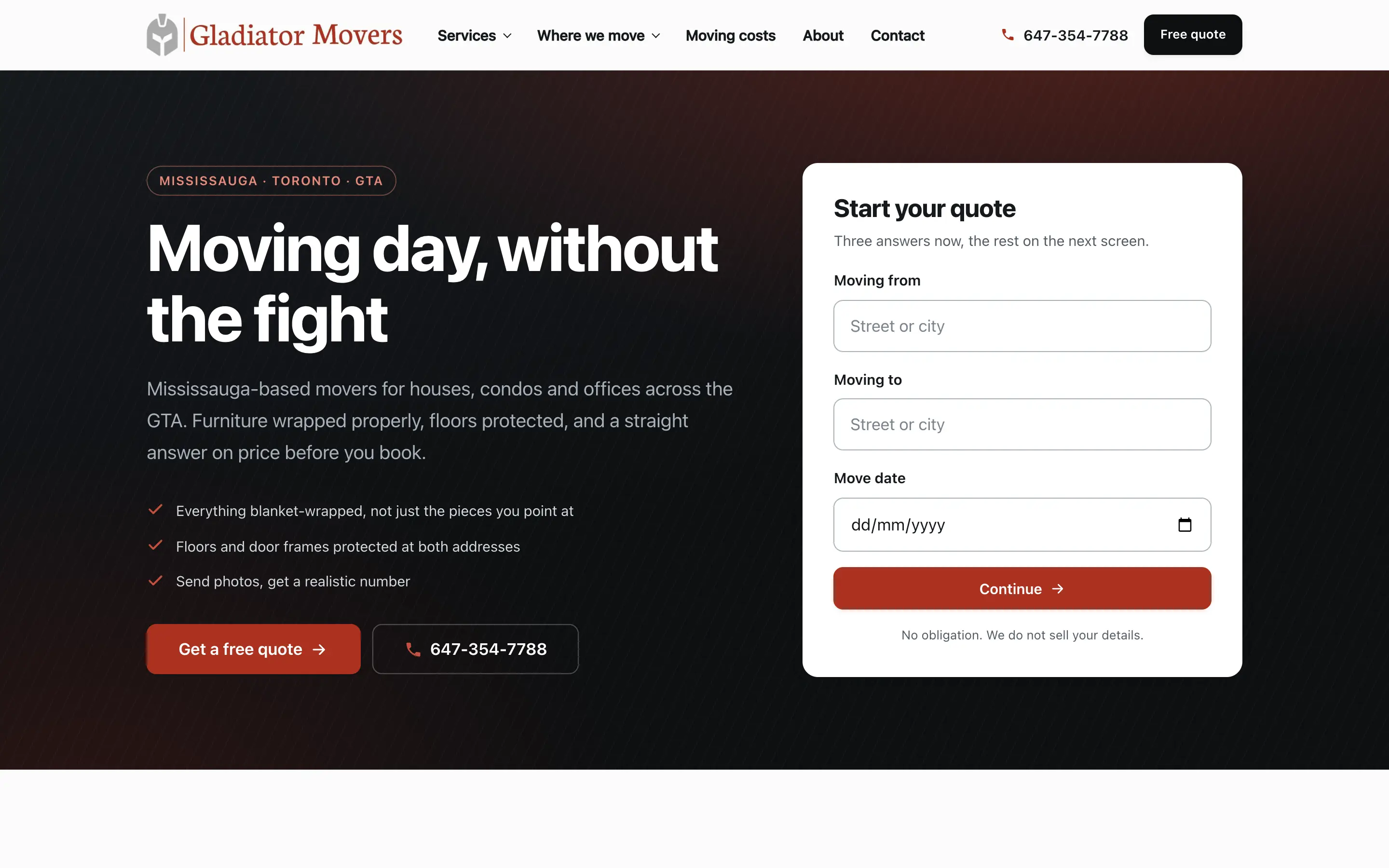
A moving company site where the quote starts in the hero, service pages exist for every job type, and the whole thing is built around one action: get a real number.
Immigration & Settlement
Immigration is the only sector on this list where the client is often reading in their second or third language, from another country, in a category the federal government actively warns them is full of fraud. That combination decides the whole build. InceptiCode builds immigration consultancy, immigration law and settlement-service websites in Toronto and the GTA around proof of legitimacy first, and in the languages the enquiry actually arrives in.
Business websites from C$2,490, fixed in writing before design starts.
The buying decision
Every other sector in this file is trying to be chosen. This one is first trying to be believed. The prospective client has been warned by IRCC about unauthorised representatives, has probably seen a scam, and is about to pay a stranger on another continent for something that determines where their family lives — so the first question is not "are you good" but "are you real and are you allowed to do this". The second decision is language, and it is not a nicety: a person will choose a representative they can be understood by over a demonstrably better one they cannot. The third is the fee, because the category’s worst actors are defined by hidden costs, and a published fee separates you from them faster than any credential.
What that changes
Six decisions that follow directly from how this purchase gets made, rather than from what looks good in a portfolio.
An immigration consultant in Canada must be a member of the College of Immigration and Citizenship Consultants, and a lawyer must be a member of a provincial law society. The registration number, the regulator’s name and a link to the public register belong in the footer of every page, not on an about page. The client has been told to verify — make verifying take one click, because the alternative is that they go and check a competitor who made it easy.
A separate indexed page per language, with its own URL, its own metadata and reciprocal hreflang, so that someone searching in Mandarin, Punjabi, Arabic, Spanish or Tagalog finds a page in that language rather than an English page with a dropdown. A browser-translation widget is invisible to search entirely and reads, to the person it is meant to serve, as a business that did not think they were worth writing for.
Express Entry, provincial nomination, spousal and family sponsorship, study permits, post-graduation work permits, LMIA-based applications, visitor extensions, citizenship, refugee claims, appeals. Each is a different applicant with a different anxiety and a different vocabulary, and a combined "Services" page reaches none of them. This is also where the site earns its authority: programme pages that are accurate and current are the ones that get linked, quoted and returned to.
Your professional fee, the government processing fee, and what is not included, as three separate lines. This one structural choice does more to distinguish a legitimate practice from a predatory one than any amount of copy, because concealing the split is the defining behaviour of the operators the client has been warned about.
Guaranteed approval, guaranteed visas and guaranteed jobs are the standard marketing of immigration fraud, and a legitimate practice that borrows the phrasing is placing itself in that company. The regulators prohibit it, and the more useful point is commercial: an informed client reads a guarantee as a warning sign. Published processing realities, eligibility explained honestly, and a plain statement of what you can and cannot influence outperform it.
A large share of this audience arrives on a mid-range Android over a congested mobile network, sometimes from a country where the nearest server is far away. Page weight is not a technical vanity metric here — it is whether the enquiry happens at all. Text-first pages, images that are actually optimised, and no dependency on a heavy framework to render a paragraph.
Common mistakes
Every one of these is something we have found on a live site in this industry, and every one costs enquiries that were already earned.
Evidence
InceptiCode has not published an immigration case study. What transfers is unusually direct rather than analogous: this site is itself built in four languages — English, French, Simplified Chinese and Arabic — with a real URL, real metadata and reciprocal hreflang per language, which is exactly the architecture described above and is the thing most immigration websites get wrong. The multilingual work is a live capability rather than a claim, and it exists because the first enquiry this business ever received was from a client who needed a second language and found nothing describing it.
A moving company site where the quote starts in the hero, service pages exist for every job type, and the whole thing is built around one action: get a real number.
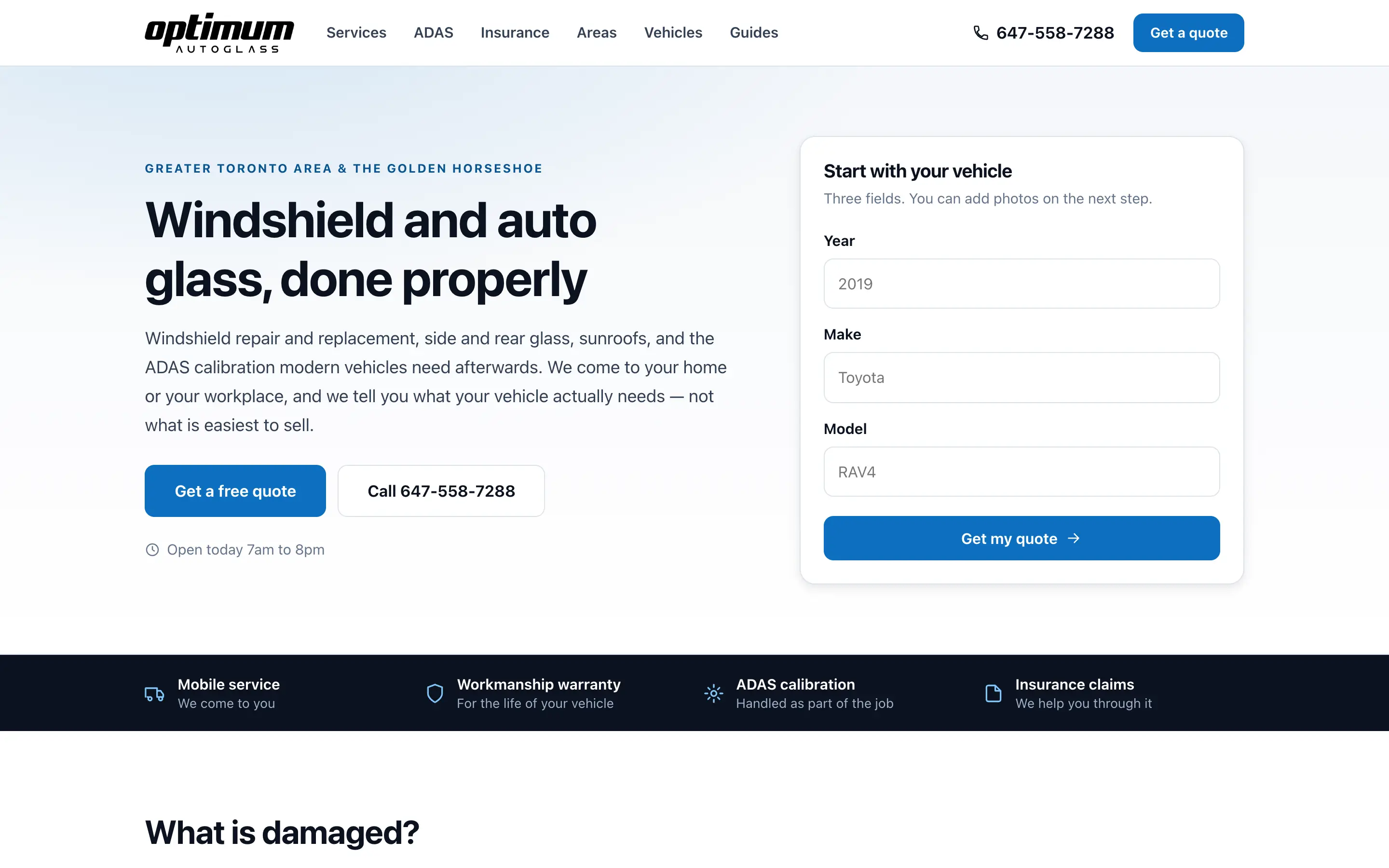
An auto glass site that asks for the vehicle first, explains ADAS and insurance plainly, and has a landing page for every service, area and vehicle people search.
A full online store with cart and checkout, built Arabic-first with a proper right-to-left layout and an English switch — not a translated afterthought.
How it works
The same process whatever the sector — because the thing that changes by industry is what gets built, not how the project runs.
A short call or a form. What you do, who buys from you, what you want the website to bring in. No technical questions.
InceptiCode comes back with a page-by-page plan and a fixed price. You approve it before anything is designed or built.
The key pages are designed properly, with your content in them rather than a wireframe. Two rounds of revisions are built into the price.
The approved design gets built — responsive, fast, with forms and tracking wired up as part of the work.
A staging link goes to you, and you go through it properly. Content, links, forms, phone numbers. Anything wrong gets fixed before launch.
InceptiCode handles DNS, hosting and the cutover, submits the sitemap to Google, and confirms tracking is recording. Then we stay reachable.
FAQ
The ones your enquiries already arrive in, and no more. Three languages done properly — real URLs, translated by a person, metadata and forms included — beat eight run through machine translation, because a page in awkward Mandarin damages trust in the exact category where trust is the product. The honest way to choose is to look at what your existing clients speak rather than at what seems ambitious, and to add the fourth language when the third is finished rather than launching all of them half-done.
No, for two separate reasons that both matter. Search engines index the English page and never see the translated version, so you do not appear in searches made in the other language at all — which is most of the point. And the widget translates a page written for an English reader, so the argument, the examples and the ordering stay English while only the words change. A real localised page is a different page: same substance, said the way it would be said in that language, at its own address.
Only what you can substantiate and are permitted to claim, which in practice is less than most sites in this category assert. Approval depends on the applicant’s file and on the department, so a published success rate implies control you do not have, and a guarantee crosses into the territory the regulators prohibit and clients have been warned about. What genuinely works instead is specificity: which programmes you actually run, how many of that type you have handled, what a realistic timeline looks like right now, and what you do when a file is refused.
More answers on the FAQ page and the pricing page.
What you do, who buys from you, and what the site has to bring in. Business websites from C$2,490. We normally reply within one business day.