Gladiator Movers
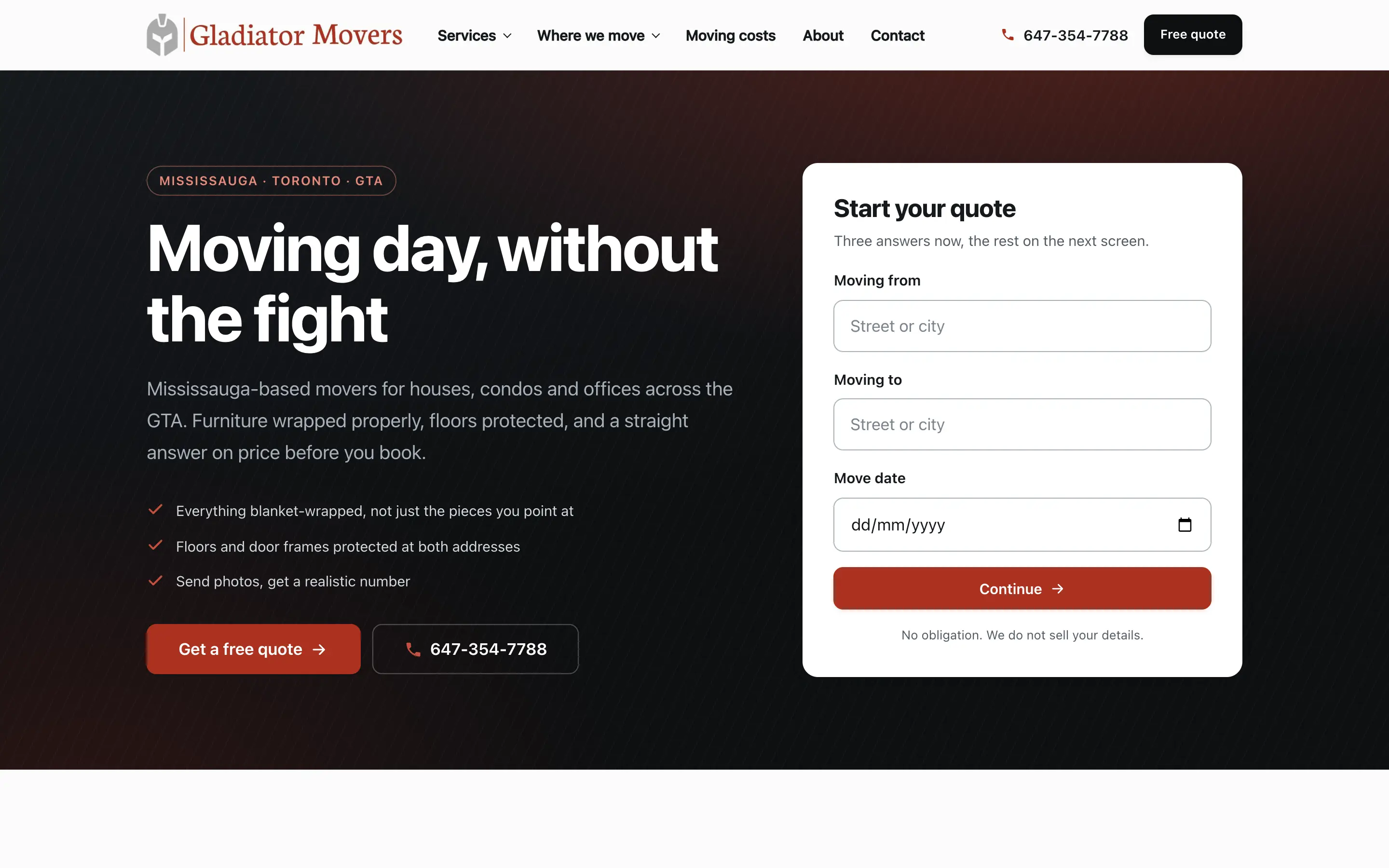
A moving company site where the quote starts in the hero, service pages exist for every job type, and the whole thing is built around one action: get a real number.
Restaurants & Hospitality
A restaurant website has about eight seconds and one job, and it is almost never the job the website was designed for: someone standing on a sidewalk with a phone wants the menu, tonight's hours, and a table. InceptiCode builds restaurant, café and catering sites in Toronto and the GTA around that moment — and around the commercial question underneath it, which is how much of your order volume you are renting from a delivery platform.
Business websites from C$2,490, fixed in writing before design starts.
The buying decision
A restaurant serves two customers who behave nothing alike. The first is deciding where to eat in the next twenty minutes, on a phone, often outdoors, and needs the menu, the hours and directions with no obstacles between them and the tap. The second is booking an event, a large party or catering weeks ahead, on a laptop, and needs capacity, minimums, dietary handling and a real quote. Most restaurant sites are built for a third customer who does not exist: a desktop visitor with time to appreciate a full-screen video. Underneath both sits the margin question — every order that arrives through a delivery platform costs a commission, and the website is the only channel where the customer relationship is yours.
What that changes
Six decisions that follow directly from how this purchase gets made, rather than from what looks good in a portfolio.
A PDF menu cannot be read by Google, cannot be searched for a dish, pinch-zooms badly on a phone and is invisible to screen readers. It is also the single most common reason a restaurant does not appear when someone searches a dish plus the neighbourhood. The menu is pages of real text, with prices, allergens and sections that can be updated by the kitchen without a developer.
Hours belong in structured data so they appear in the search result itself, and they have to match Google Business Profile exactly. Holiday hours are where this fails: a restaurant that is open on a long weekend and shows "Closed" in search loses that entire day, and nobody notices because the loss is invisible.
OpenTable, Resy, Tock or a direct form for tables; your own ordering or a first-party platform for pickup. The distinction that matters commercially is between an order that arrives through your site and one that arrives through a marketplace at fifteen to thirty per cent — a site that makes direct ordering as easy as the app is the only lever a restaurant has on that.
This is the high-margin work, it is bought completely differently, and it is usually one paragraph at the bottom of a page. It needs its own pages: capacity, room photographs, minimums, packages, dietary accommodation, and a form that captures date, headcount and service style rather than a message box.
This is the one sector where photography is genuinely load-bearing, and it is also the sector where stock imagery is most obvious. A dish that arrives looking nothing like the picture generates a review that costs more than the photographer would have.
For a restaurant, the search result and the map listing are more visited than the website. That means LocalBusiness and Menu structured data, consistent name-address-phone everywhere, the right cuisine and service attributes, and review links that actually work — done as part of the site, because a beautifully built restaurant site that is not wired into local search is a brochure nobody finds.
Common mistakes
Every one of these is something we have found on a live site in this industry, and every one costs enquiries that were already earned.
Evidence
InceptiCode has not yet published a hospitality case study, and this page states that rather than dressing up an adjacent project as one. What genuinely transfers: Opti4Club is an e-commerce build where the catalogue, the product page and the checkout had to work as one conversion path on a phone, which is the same discipline a menu and an ordering flow require; and the local-search structure described above — service pages, service areas, structured data, consistent listings — is exactly the work behind the Gladiator Movers build. A restaurant site is those two problems with a shorter attention span.
A moving company site where the quote starts in the hero, service pages exist for every job type, and the whole thing is built around one action: get a real number.
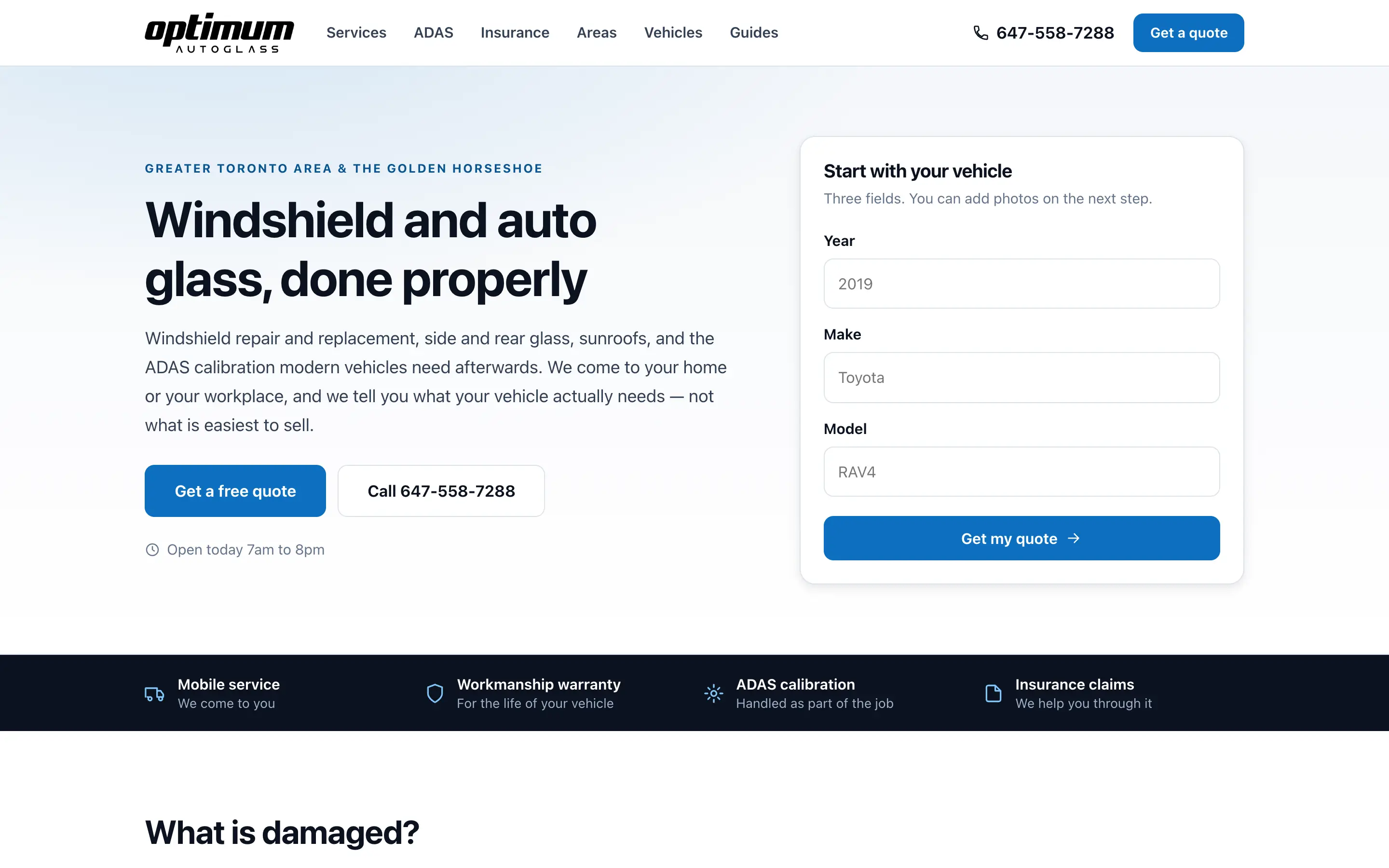
An auto glass site that asks for the vehicle first, explains ADAS and insurance plainly, and has a landing page for every service, area and vehicle people search.
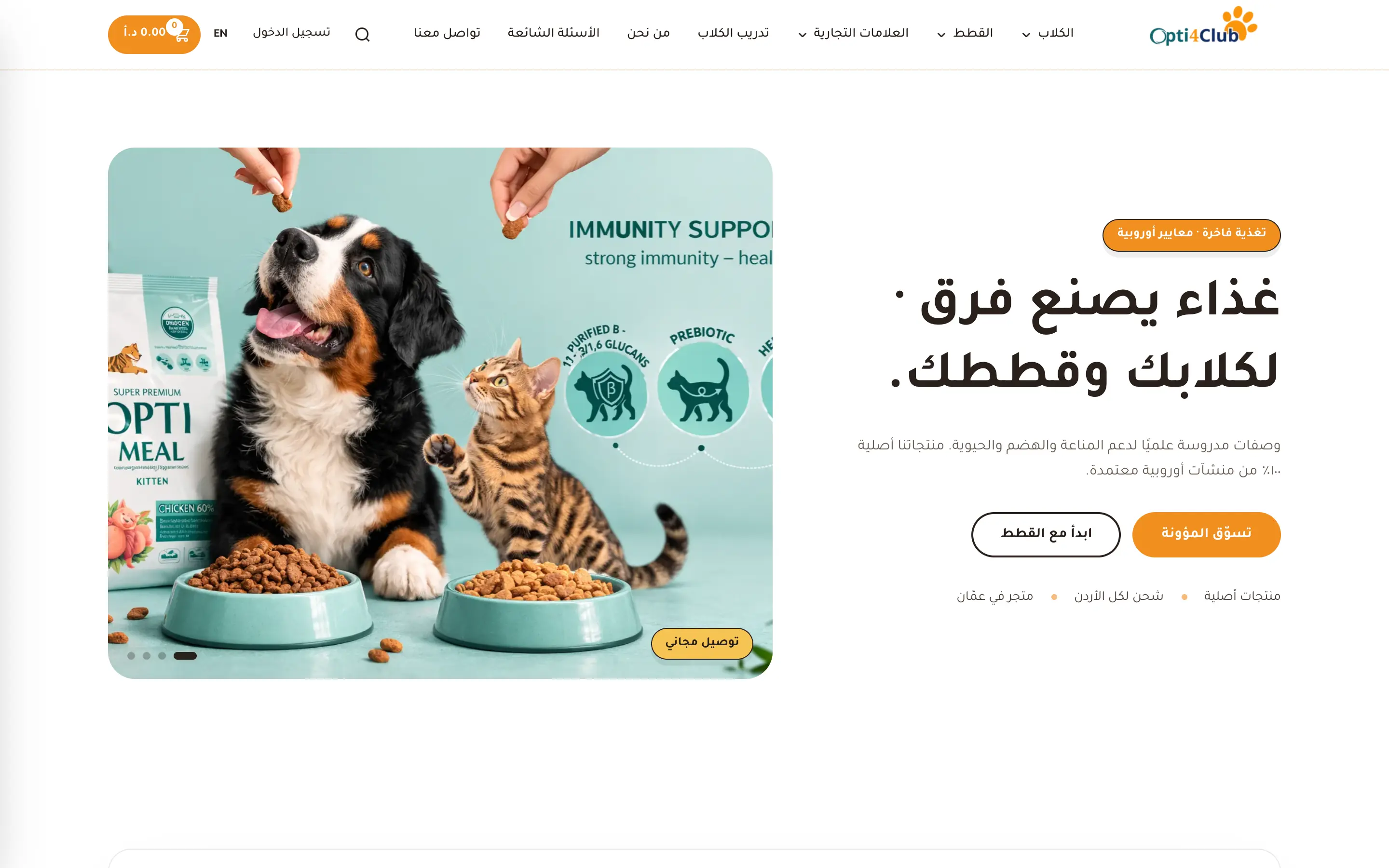
A full online store with cart and checkout, built Arabic-first with a proper right-to-left layout and an English switch — not a translated afterthought.
How it works
The same process whatever the sector — because the thing that changes by industry is what gets built, not how the project runs.
A short call or a form. What you do, who buys from you, what you want the website to bring in. No technical questions.
InceptiCode comes back with a page-by-page plan and a fixed price. You approve it before anything is designed or built.
The key pages are designed properly, with your content in them rather than a wireframe. Two rounds of revisions are built into the price.
The approved design gets built — responsive, fast, with forms and tracking wired up as part of the work.
A staging link goes to you, and you go through it properly. Content, links, forms, phone numbers. Anything wrong gets fixed before launch.
InceptiCode handles DNS, hosting and the cutover, submits the sitemap to Google, and confirms tracking is recording. Then we stay reachable.
FAQ
Yes, and for most restaurants it is the highest-value change on the list. A direct ordering flow on your own site — pickup at minimum, delivery if you have drivers or use a flat-rate courier — removes a commission of roughly fifteen to thirty per cent on every order that moves across. The realistic goal is not to replace the platforms, which are genuinely good at discovery, but to give your repeat customers somewhere cheaper to reorder from, and to put that option in front of them at the moment they are already deciding.
No, and this is the single most consequential technical decision on a restaurant site. A PDF is invisible to search — nobody searching a dish and a neighbourhood will ever find you through it — it is unreadable to screen readers, and it pinch-zooms badly on exactly the device most of your customers are holding. Keep the PDF for print; the website menu is real text, updatable by your team, with the prices and allergens in it.
Hours are entered once on the site, published as structured data so the search result reads them, and mirrored to Google Business Profile as part of the launch checklist. Holiday hours are the part that actually goes wrong, so they are handled as a first-class feature rather than an annual edit somebody forgets — a restaurant showing "Closed" on a long weekend it is open loses that day entirely and never sees the loss.
If you take catering or private-event work at all, yes — and usually several pages, not one. It is bought weeks ahead by someone comparing capacity, minimums and packages rather than by someone choosing dinner, so it needs its own pages, its own photographs and its own enquiry form asking for the date, the headcount and the service style. Restaurants routinely find this becomes the highest-value part of the site because it was previously one sentence nobody could act on.
More answers on the FAQ page and the pricing page.
What you do, who buys from you, and what the site has to bring in. Business websites from C$2,490. We normally reply within one business day.